

JOE · ONE MOMENT AT A TIME
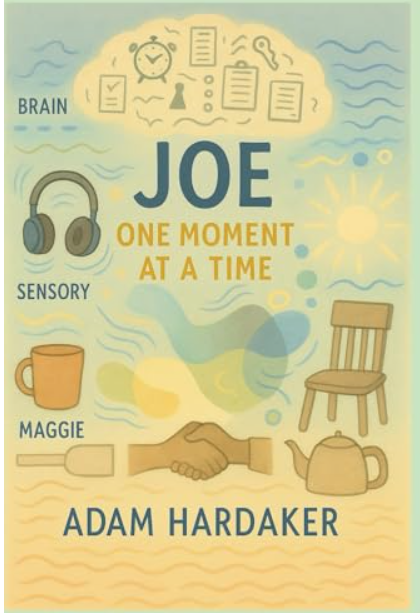
THE SAME MOMENT
CAN FEEL COMPLETELY DIFFERENT.
Joe sees the world one way.
His Nan sees it another.
And the people around them are often seeing something else entirely.
Joe: One Moment at a Time tells the same moments through three different perspectives — showing how understanding can change when we stop assuming everybody experiences the world like we do.
Three voices. One moment at a time.
Sometimes understanding somebody starts with seeing the world from where they're standing.
DISCOVER JOE ↓

THE STORY
SOMETIMES THE HARDEST PART
ISN'T WHAT HAPPENED.
IT'S UNDERSTANDING WHY.
Joe's world makes sense to Joe.
The difficulty starts when everybody
else expects it to make sense to them.
Joe experiences moments differently.
A sound can be more than background noise. A change of plan can be more than an inconvenience. Something that seems small to somebody else can become the biggest thing in the room.
His Nan sees those same moments from the outside.
She loves him. She wants to help him. But loving somebody doesn't automatically mean understanding everything they're experiencing.
And then there is the version the rest of us might see.
Three perspectives.
The same moment.
Three completely different versions of what just happened.
Joe: One Moment at a Time isn't about deciding who is right.
It's about what can happen when we stop asking “What's wrong with him?” and start asking a different question:
“What is this moment like for Joe?”


THREE VOICES.
ONE MOMENT.
The same thing happens. What it means depends on who is experiencing it.
HOW THE BOOK WORKS
From inside the moment.
JOE
Joe's chapters put us inside
his experience.
The sounds. The details. The patterns. The things that feel important even when nobody
else seems to notice them.
What looks confusing from the outside can make complete
sense when we experience the moment alongside him.

NAN
Nan knows Joe better than
most.
She sees the signs, understands the routines and tries to protect him from a world that doesn't always understand what
he needs.
But even Nan can't experience
the moment exactly as
Joe does.
From beside him.

THE NARRATOR
Then we see what everybody
else might see.
The behaviour. The reaction.
The moment without access to everything happening
underneath it.
Same event.
Different information.
From the outside looking in.

Nobody has moved.
Only the perspective has.

IT'S NOT REALLY ABOUT AUTISM.
Well... not entirely.
Autism is part of Joe's story.
It shapes how he experiences the world. The things he notices. The things that overwhelm him. The routines that matter and the moments that can become difficult when the people around him don't understand why.
But Joe: One Moment at a Time isn't a book about a diagnosis.
It's about a person.
It's about family.
Communication.
Frustration.
Love.
And the enormous difference between seeing somebody's behaviour and understanding what might be happening underneath it.
From the outside, a reaction can look unreasonable.
A refusal can look difficult.
A need for something to happen in a particular way can look unnecessary.
But change the perspective and the same moment can tell a completely different story.
Joe doesn't need everybody to experience the world the way he does.
He needs the people around him to accept that he experiences it differently.


INSIDE JOE'S WORLD
THE LITTLE THINGS
AREN'T ALWAYS LITTLE.
Sometimes the difference between coping and not coping can be something everybody else barely notices.
For Joe, the world isn't necessarily made difficult by the things other people expect.
Sometimes it's the things they don't notice at all.
A noise that won't disappear.
A light that's too bright.
Food that feels wrong.
Something being in a different place.
A plan changing without warning.
The wrong clothes. The wrong texture. The wrong sound at exactly the wrong moment.
From the outside, the reaction can seem bigger than the thing that caused it.
But that's because we're measuring the moment by our experience of it.
Joe's chapters give us something we don't normally get when we see somebody struggling.
They let us experience the moment from the inside.
And suddenly the little thing doesn't seem quite so little.
Understanding starts when we stop deciding how somebody else should experience the world.




BEHIND THE BOOK
WHY I WROTE IT
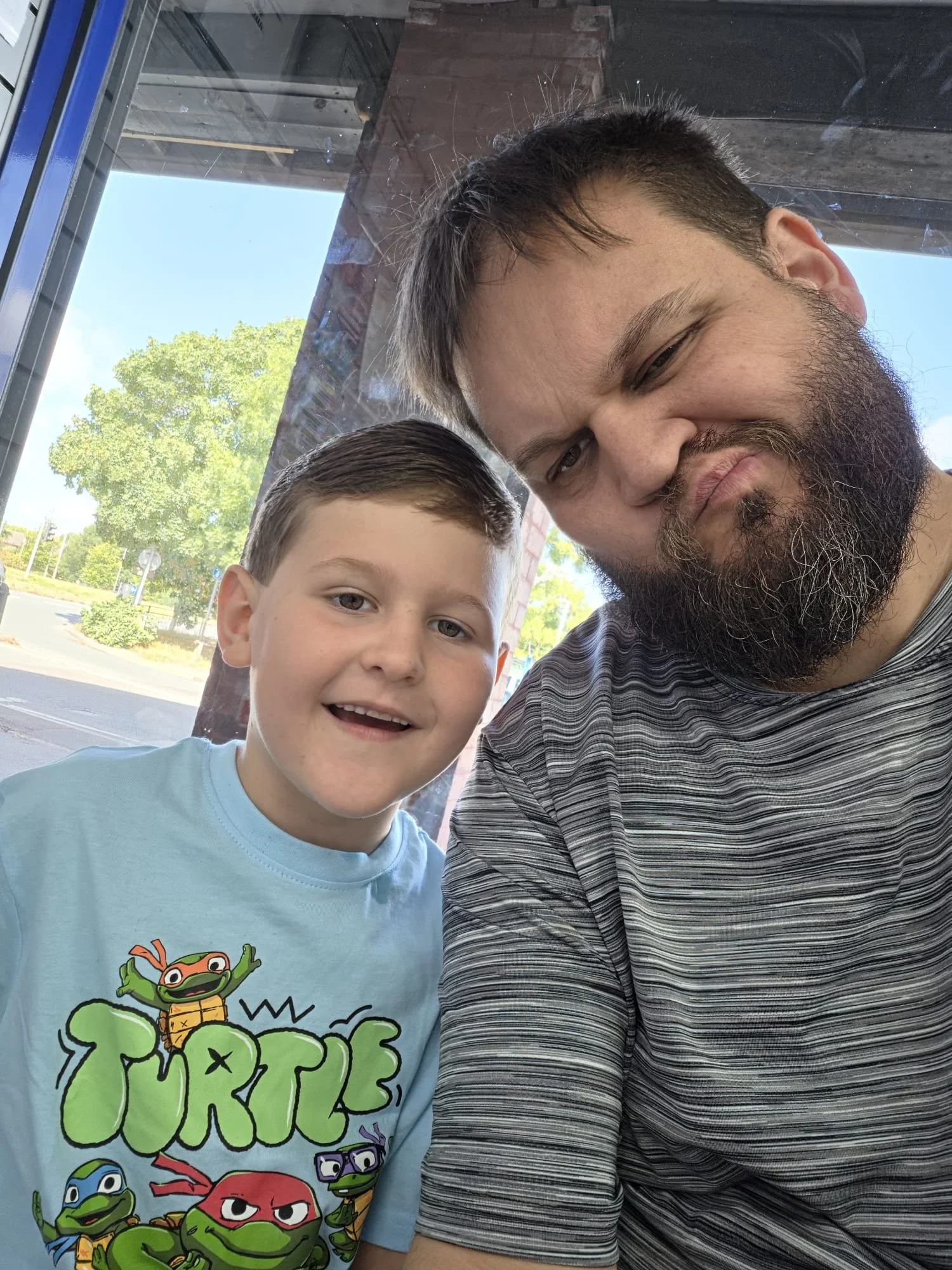
The real inspiration behind Joe
me and Charlie.
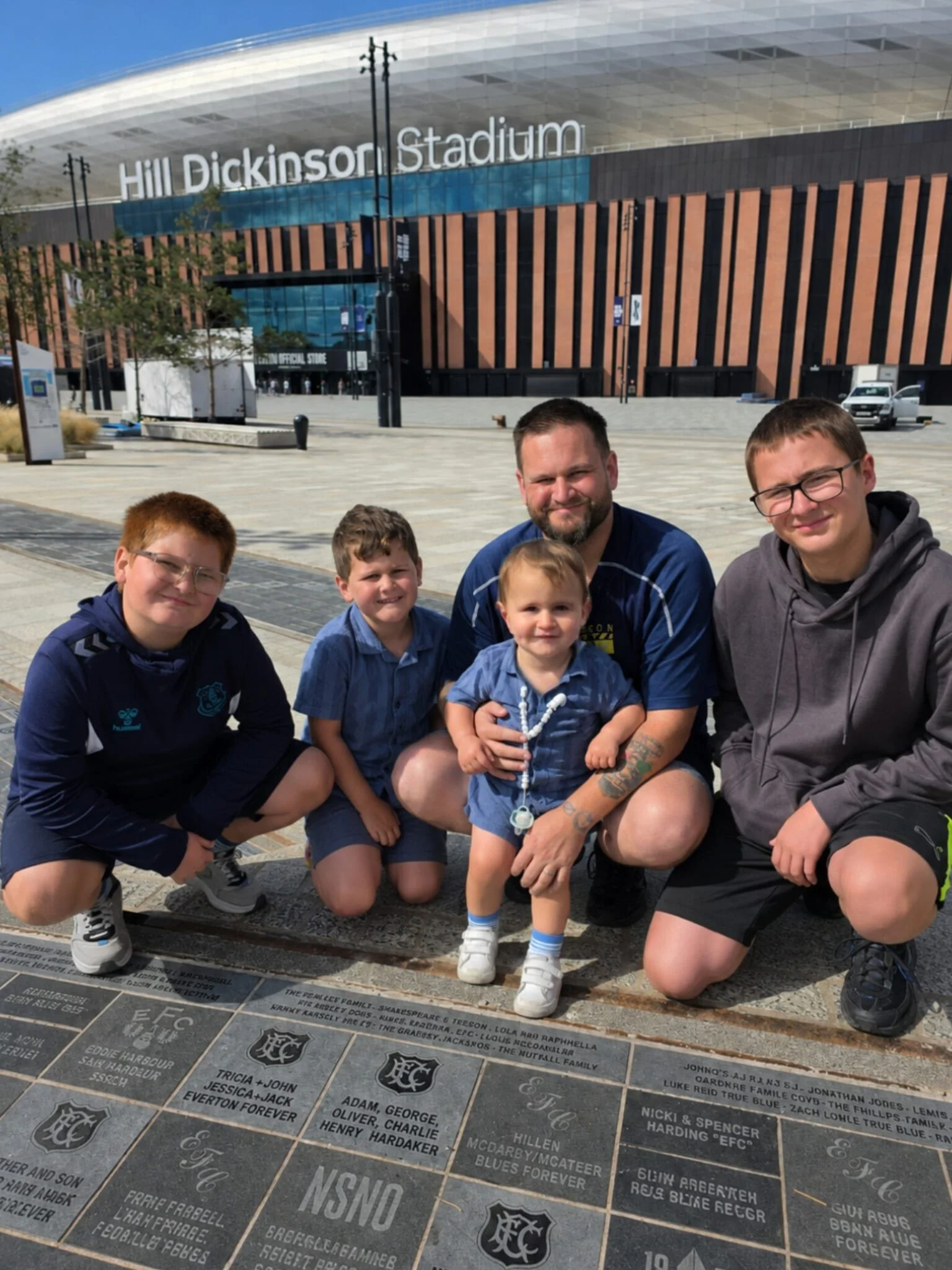
Because sometimes understanding someone means accepting that the world doesn't feel the same to them as it does to you.
Joe is fictional.
But a lot of the reason I wrote him comes from my son, Charlie.
Being Charlie's dad has taught me more about communication, patience and understanding than any qualification or years spent working in social care ever could.
There are moments when something that seems tiny to me can be enormous to him.
A change of plan. A noise. The wrong food. Something not happening in the order he expected. A situation I've looked at and thought shouldn't be a problem at all.
Except I'm looking at it through my eyes.
Charlie isn't.
And I've got it wrong plenty of times.
I've tried to solve the problem before understanding what the problem actually was. I've wondered why a reaction was so big before stopping to consider how big the thing causing it might have felt to him.
That's where the idea behind Joe: One Moment at a Time really comes from.
I wanted to take one moment and look at it from different sides.
Joe experiences it from inside.
Nan experiences it as somebody who loves him and is trying to help.
And then there's the outside view — the version the rest of us might see and make a judgement about without knowing everything happening underneath.
I've spent nearly thirty years working in health and social care, much of it alongside people with learning disabilities and autism. That experience absolutely shaped this book.
But being Charlie's dad made it personal.
It taught me that knowing about autism and knowing the person in front of you are two very different things.
I don't always get it right.
Neither does Nan.
Neither will every person who meets Joe.
And that's part of the point.
This book isn't about telling people this is what autism looks like.
It's about asking us to look again when somebody experiences the world differently from us.
To be a little more patient.
To judge a little less quickly.
And sometimes, instead of asking why somebody can't cope with our world, to ask what we could change to make their moment a little easier.
Joe may be fictional.
The reason I wrote him isn't.
— Adam

DON'T JUST TAKE MY WORD FOR IT
★★★★★
“It made me see things from a different point of view and reminded me not to judge people without understanding what they might be going through.”
Well worth a read
— Sal
WHAT READERS ARE SAYING
★★★★★
“A great insight into untypical children's minds and behaviours.”
Great read!
— Ms S
★★★★★
“Joe's perspective is refreshing... it is a great insight for others.”
Beautifully written and full of heart.
— Kindle Reader

AT THE HEART OF THE STORY
JOE
He isn't trying to make life difficult. Sometimes life is difficult for him.
Joe notices things.
The hum nobody else seems to hear.
The texture everybody else says is fine.
The plan that was supposed to happen one way and suddenly isn't happening that way at all.
To somebody watching, those things can seem small.
To Joe, they're part of a world that can become very big, very quickly.
And when that happens, the people around him see the reaction.
They don't always see everything that came before it.
That's why Joe's voice matters.
His chapters don't explain autism.
They explain Joe.
His routines. His senses. His frustrations. His humour. The things he loves and the things he needs the people around him to understand.
Because Joe isn't a behaviour to manage.
He isn't a diagnosis to explain.
He's a boy trying to navigate a world that doesn't always make room for the way he experiences it.
Understanding Joe doesn't begin
with changing him.
It begins with listening to him.
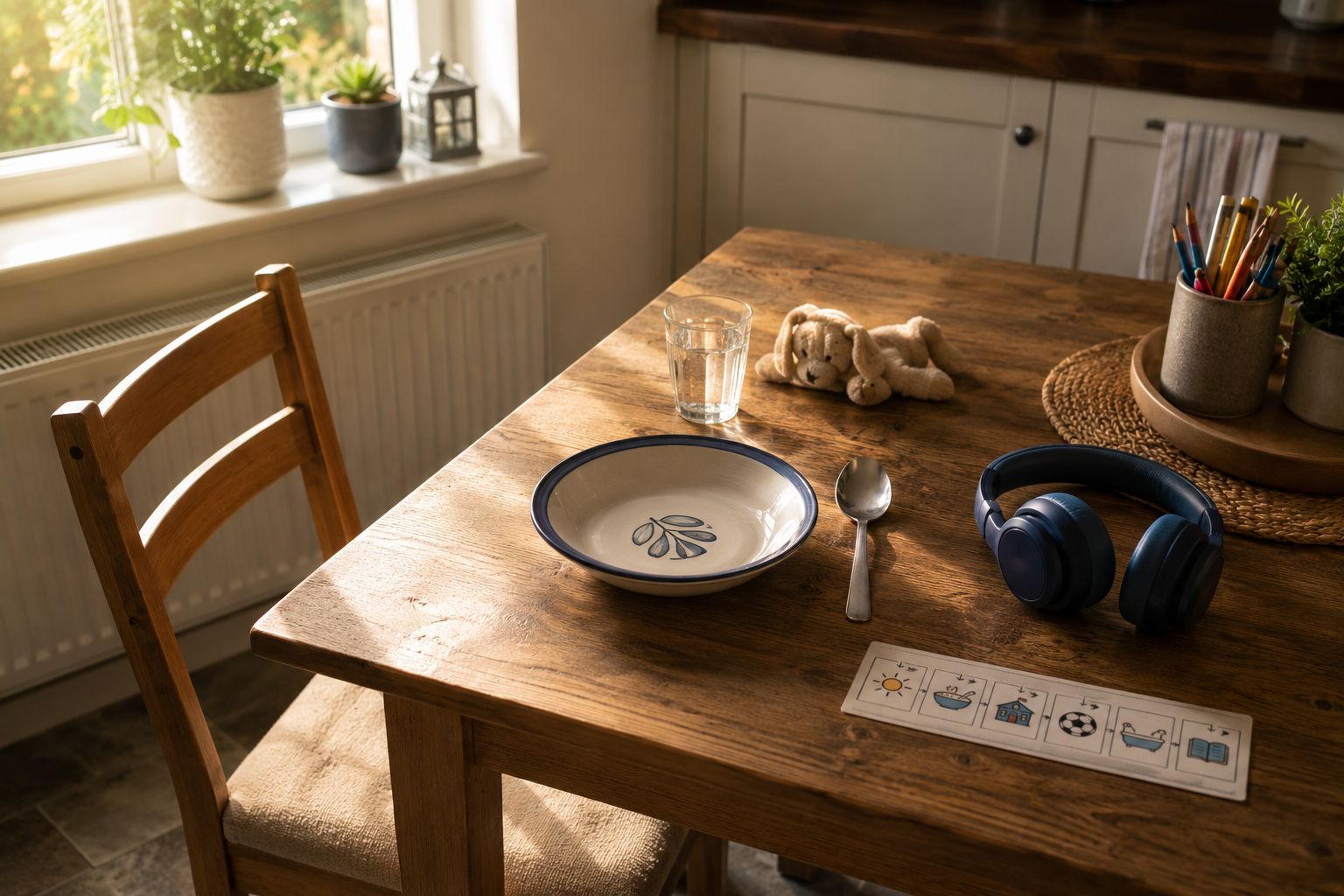

DON'T TAKE MY WORD FOR IT.
ONE MOMENT. THREE PERSPECTIVES.
Same moment. Same people. A completely different experience depending on where you're standing.
JOE'S TAKE
I was a storm.
I didn’t eat lunch.
He tried. Sandwiches. Crisps.
Even jelly.
But he used the red plate.
The red plate means no.
Emergency. Danger. Don’t.
I sat in the hallway.
Waited.
Checked the clock every 12 minutes.
Waited.
Listened.
Waited.
Then the key in the door.
Maggie.
Hair a bit messy.
Smelled like rain and tired.
She said, “I’m sorry, love. Got held up.”
I didn’t answer.
I just walked to the corner of the room.
Pressed my hands against the wall.
Maggie didn’t ask for a hug.
She didn’t say anything for a bit.
Then she said, “Was it hard?”
I nodded.
She said, “Me too.”
MAGGIE’S TAKE
It was just a training day.
A short session.
Safeguarding, they said. Mandatory.
I left a full note.
Laid everything out.
Joe’s snacks.
Timings.
Instructions.
What not to say.
What never to do.
Dave’s good. He means well.
But he’s not me.
And more importantly, he’s not familiar.
[...]
I rushed home.
Rain on my coat.
Shoes soaked.
Opened the door, saw Joe — small and curled, like a bracket.
I knew.
He’d held it all day.
And now I was back, it was safe to let go.
I told him I was sorry.
I didn’t over-explain.
I just said, “Me too.”
And we sat.
No telly.
No talk.
Just a shared quiet.
Sometimes that’s all a person needs to feel whole again.
NARRATOR’S TAKE
Every routine has a rhythm.
Every rhythm holds a person.
And when that person doesn’t appear —
even for a little while —
the whole song goes quiet.
Joe’s world isn’t built on trust that people stay.
It’s built on patterns that people sometimes stay… until they don’t.
He doesn’t ask, “Where is she?”
He asks, “Is she coming back?”
But not out loud.
Out loud, he asks nothing.
[...]
Maggie’s delay wasn’t long.
But for Joe, it wasn’t minutes that mattered. It was certainty.
And that certainty vanished the moment the doorbell rang, and it wasn’t her.
When she finally returns —
her breath rushed, her keys jangling —
she doesn’t realise right away that Joe’s not upset with her.
He’s upset with everything that came instead.
Because when you’ve lost people before,
every new goodbye sounds permanent.
NOTHING ABOUT THE MOMENT CHANGED.
ONLY THE PERSPECTIVE DID.

JOE · ONE MOMENT AT A TIME
Joe's world isn't wrong.
Maggie's isn't either.
They're simply experiencing the same moments from different places.
And somewhere between those perspectives is where understanding begins.
Joe: One Moment at a Time is a story about grief, family, autism, patience and learning to meet somebody in their world — rather than constantly asking them to fit into ours.
But more than anything, it's about seeing the person before the behaviour.
One boy.
One family.
One moment at a time.
SOMETIMES WE JUST
NEED TO LOOK AGAIN.
Maybe the next time we don't understand somebody,
we'll look at the moment again.