
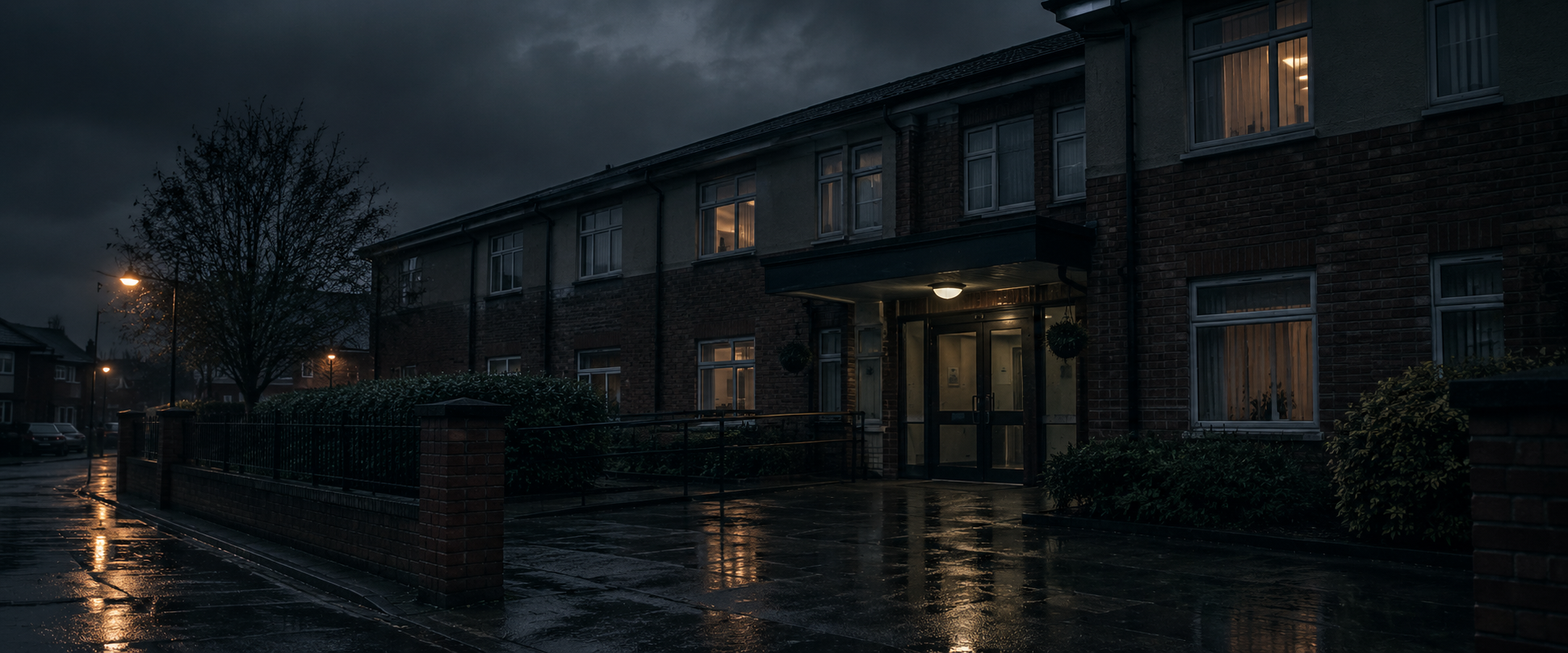
ST DOMINGO HOUSE · REGISTERED MANAGER
REGISTERED
THE PAPERWORK SAID
EVERYTHING WAS FINE.
The building told a different story.
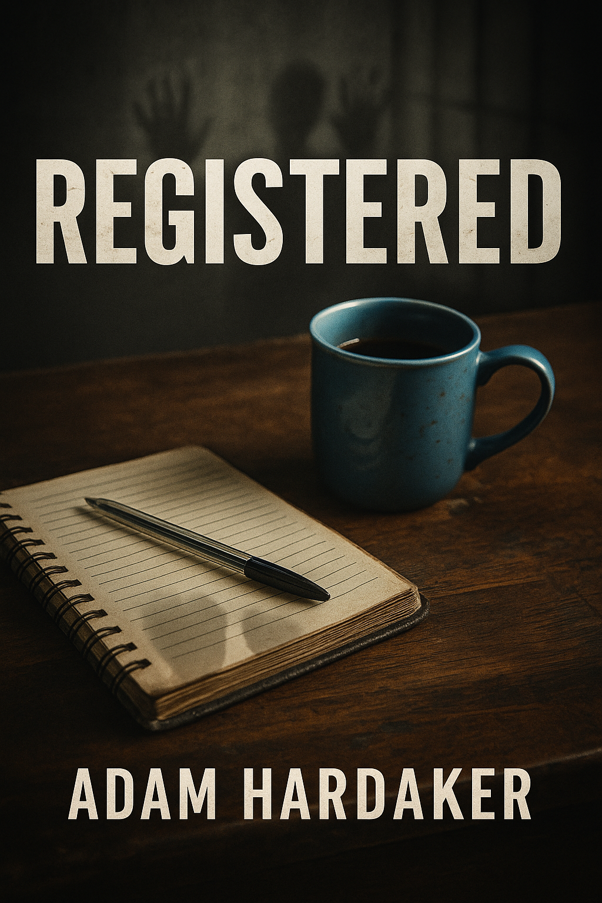
Nathan Kearns arrives at St Domingo House with a new job, a notebook and the belief that if something is wrong, you fix it.
It doesn't take long to realise how much is wrong.
Neglect has become normal. Staff are exhausted. Families have stopped expecting answers. And somewhere between policies, meetings, rotas and reassuring words, the people the service exists for have been pushed further and further from the centre of it.
Nathan starts writing down what needs to change.
Then he discovers that fixing a broken service is one thing.
Surviving the system around it is another.
Protect them from us.

THE STORY
A SERVICE CAN LOOK
FINE ON PAPER.
PEOPLE CAN STILL
BE FAILED INSIDE IT.
St Domingo House hasn't collapsed. That's part of the problem.
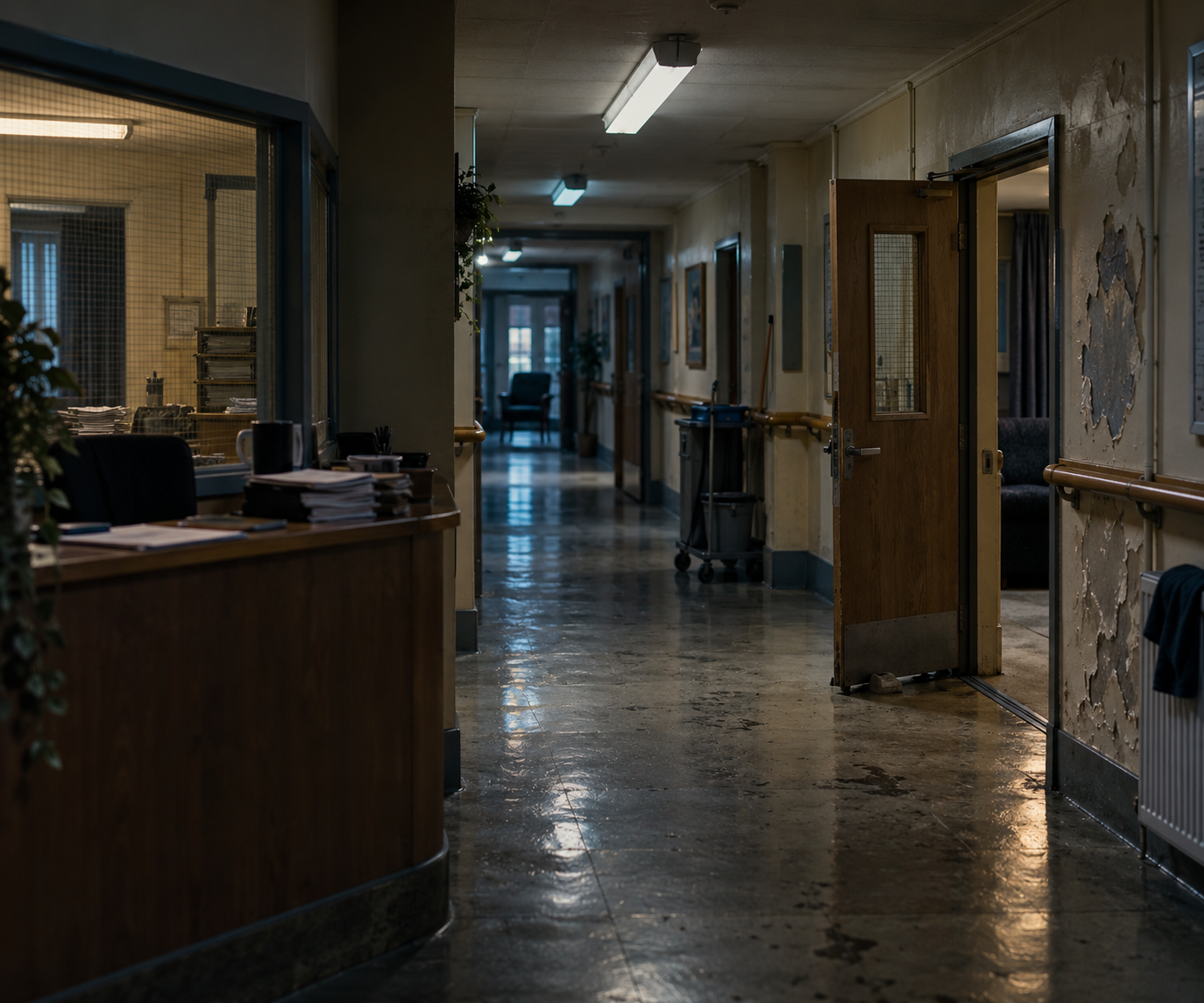
Nathan Kearns arrives in Bootle to take over St Domingo House.
The paperwork is there.
The rotas exist.
Fire checks have been signed.
Support plans have been written.
But almost immediately, Nathan starts seeing the gap between what has been recorded and what is actually happening.
A fire door is wedged open.
Medication records have gaps.
Support plans read as though they were written by people who have never met the person they're supposed to describe.
Cleaning schedules look immaculate in folders while neglect sits openly in the corridors.
And underneath all of it is something harder to fix:
people have got used to it.
St Domingo House isn't experiencing one dramatic failure.
It has adapted to lots of smaller ones.
Staff know which problems will never be fixed. Families have learned which answers they're likely to get. People supported have learned what to expect — and, sometimes, what not to expect at all.
Nathan wants to change that.
But the deeper he gets into St Domingo House, the more complicated the job becomes.
Because services aren't made from policies.
They're made from people.
People who care.
People who are exhausted.
People who cut corners.
People who speak up.
People who stay quiet.
And a manager who is beginning to discover that carrying everybody else's problems can come with a cost of its own.
Nathan came to change St Domingo House.
He hasn't yet realised how much St Domingo House is going to change him.

THE SYSTEM
EVERYTHING HAS
A BOX TO TICK.
That doesn't mean anybody is actually listening.

Social care is full of systems designed to keep people safe.
Policies.
Audits.
Risk assessments.
Support plans.
Training records.
Incident forms.
Action plans.
Nathan understands why they exist.
He also understands something much more uncomfortable:
a completed form isn't the same thing as good care.
At St Domingo House, the paperwork can say one thing while the people living and working there experience something completely different.
A signature can prove a check happened.
It can't prove anybody cared about the answer.
A support plan can describe somebody in hundreds of words.
It doesn't mean anybody knows them.
An action plan can record that something will change.
It doesn't mean it will.
And when everybody becomes more concerned with proving the system works than asking whether it actually does, the paperwork stops protecting people.
It starts protecting the organisation.
THE FILE CAN BE PERFECT.
THE SERVICE CAN STILL BE BROKEN.
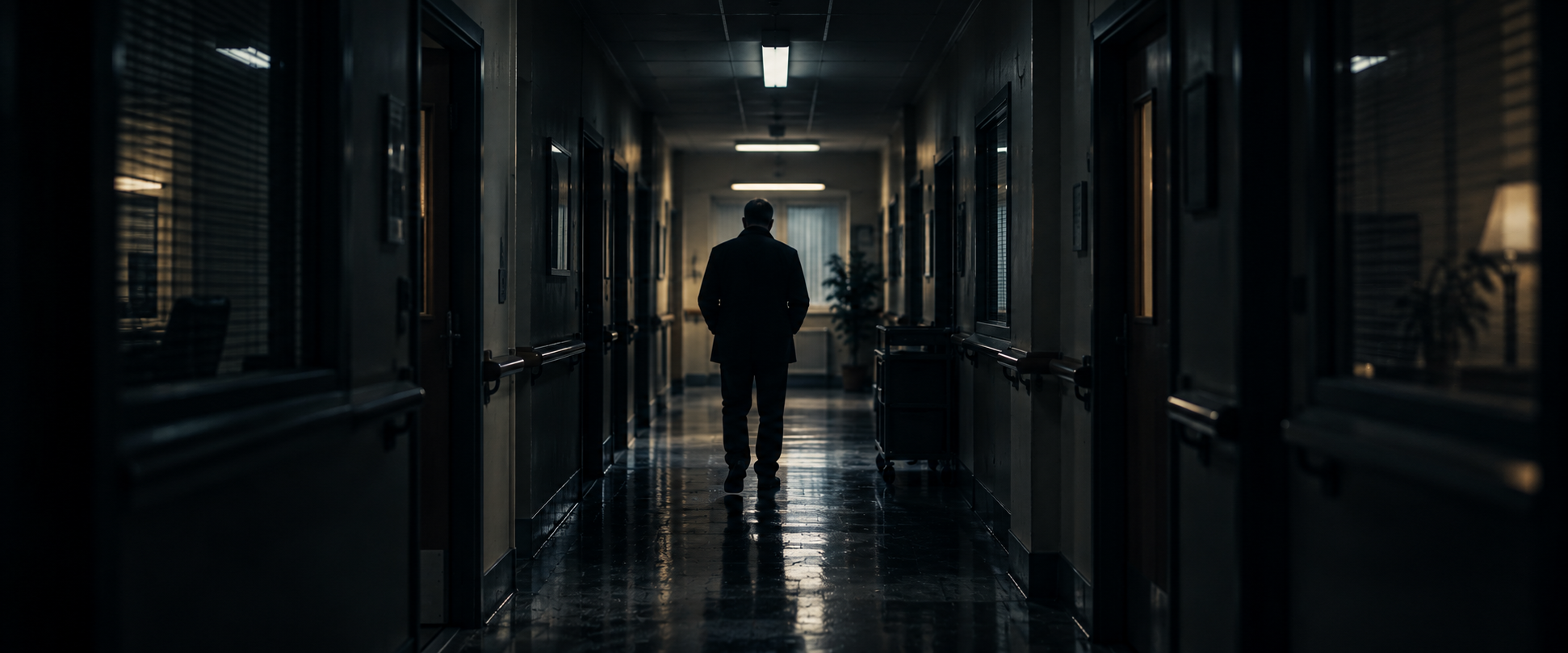
IT’S NOT REALLY ABOUT SOCIAL CARE.
IT’S ABOUT WHAT HAPPENS
WHEN PEOPLE BECOME
PART OF THE SYSTEM.
And what happens to the people trying to change it from inside.
Registered is set in social care.
But the story is bigger than that.
It’s about institutions.
The way poor practice becomes normal when everybody has lived with it for long enough.
The way people learn which battles are worth fighting.
The way responsibility can move around a room until nobody feels completely responsible anymore.
And the way the people at the centre of a service can slowly become the least powerful people inside it.
Nathan sees the failures.
He challenges them.
He writes them down.
He expects that doing the right thing will be enough.
It isn’t.
Because changing a system means challenging the people who have learned how to survive inside it.
And sometimes the person asking the most difficult questions becomes the problem everybody wants to solve.
Some systems protect people.
Some protect themselves.

INSIDE ST DOMINGO HOUSE
THERE'S ALWAYS
SOMETHING ELSE.
Another incident.
Another shift.
Another decision that can't wait until tomorrow.
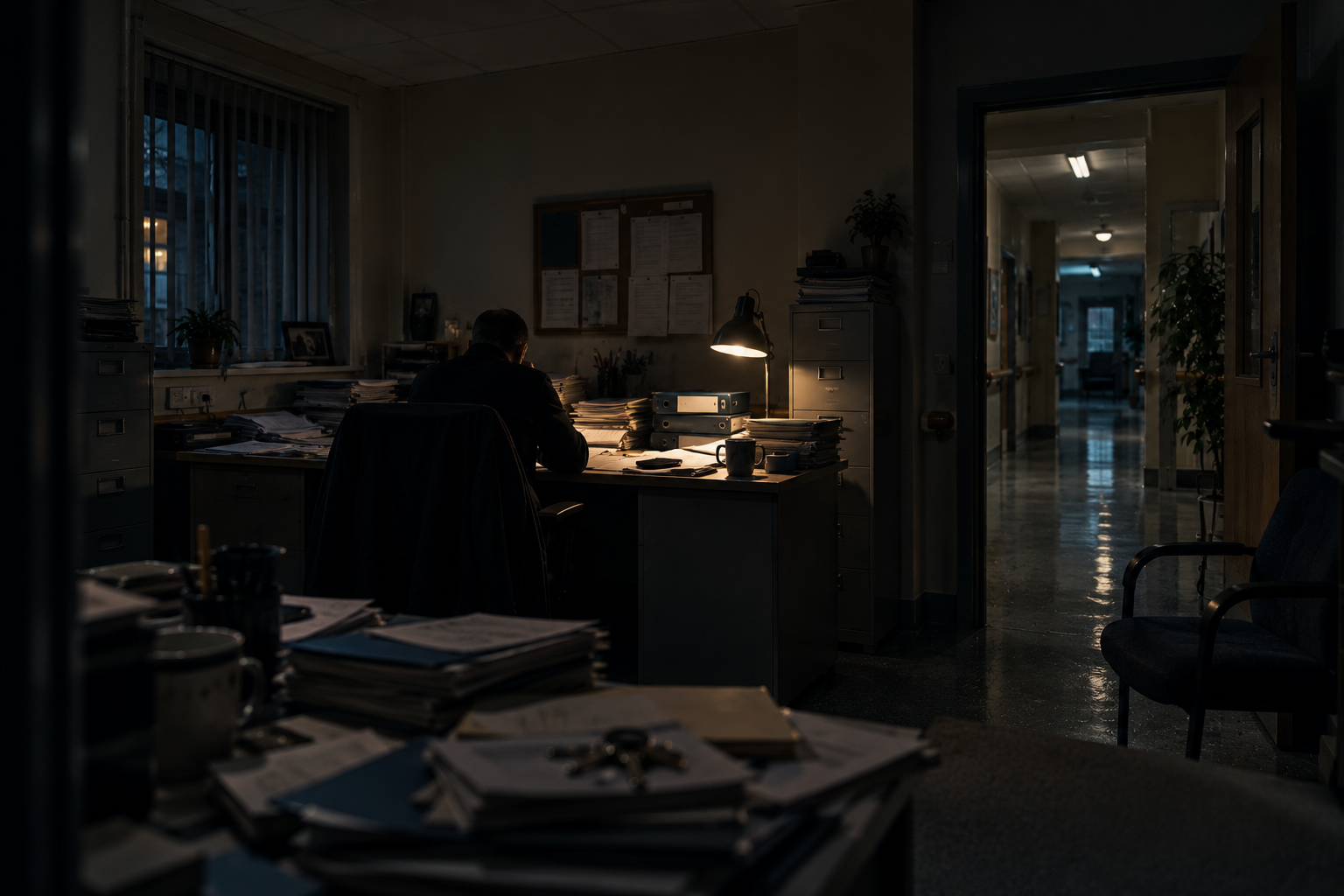
Running St Domingo House isn't one problem Nathan can walk in and solve.
It's dozens of them happening at once.
Staffing.
Medication.
Safeguarding.
Families.
Budgets.
Inspections.
Incidents.
People who need support while everybody around them is trying to keep the service moving.
Nathan is expected to know what's happening.
To make the decision.
To take responsibility.
To reassure families, challenge staff, answer senior managers and still somehow make sure the people living at St Domingo House don't disappear underneath everything else demanding his attention.
And slowly, the job begins following him beyond the building.
The phone doesn't care that the shift has finished.
The responsibility doesn't disappear when he goes home.
Neither do the things he's seen.
Being registered means your name sits above the service.
When something goes wrong, it sits there too.

BEHIND THE BOOK
WHY I WROTE IT
Because the story is fictional. The things behind it aren't.
I've worked in health and social care for most of my adult life.
And Registered comes from that world.
Nathan is fictional. St Domingo House is fictional. The names, organisations and circumstances have been changed.
But many of the things that happen in this book happened.
They're fictionalised versions of situations I've encountered during my career. Some have been combined. Some moved around. Some changed to protect the people involved.
But the reality behind them is real.
And so are the kinds of people in these pages.
I've worked with some of the very best people this sector has to offer. People who genuinely care. People who fight for the person they're supporting when nobody else seems to be listening. Staff who stay late, managers who take the phone home, and teams who somehow keep delivering brilliant support while everything around them is stretched to breaking point.
They deserve showcasing.
But I've encountered the other end of the sector too.
Poor practice. Neglect. Cover-ups. People more interested in protecting themselves or an organisation than admitting something has gone wrong. Managers who shouldn't be managers. Cultures where everybody knows something isn't right but challenging it is harder than learning to live with it.
That deserves highlighting too.
Because pretending the shite doesn't exist doesn't protect social care.
Calling it out does.
And somewhere between those two extremes are thousands of people trying to do a difficult job inside a system that doesn't always give them the staffing, money, time or support to do it properly.
Then there are the people who matter most.
The people we support.
They're the reason the whole bloody thing exists.
Yet when services become consumed by rotas, budgets, inspections, targets, incidents, staffing and paperwork, they're often the easiest voices to lose amongst all the noise.
That's why I wrote Registered.
Not because I think social care is bad.
I wrote it because I know how good it can be.
The brilliant deserves showcasing.
The shite deserves exposing.
And the people doing their absolute best — alongside the people depending on us to get it right — deserve something better than a system permanently asking them to do more with less.
Social care matters.
The people within it matter.
And it deserves better.
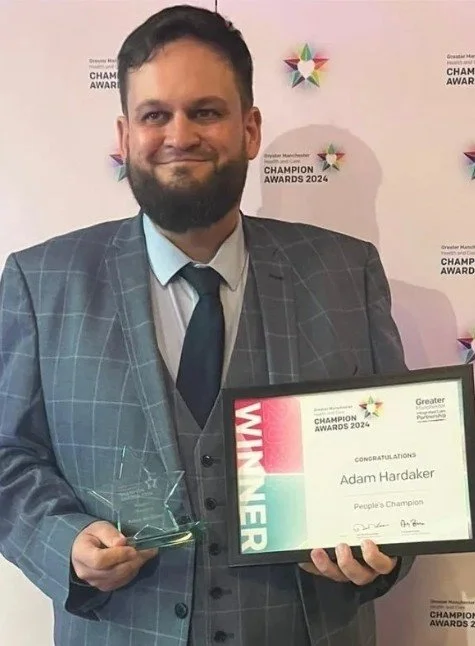
— Adam


DON’T JUST TAKE MY WORD FOR IT
WHAT READERS ARE SAYING
The same book can land very differently depending on which side of the story you recognise.
FROM THE CARE SECTOR
FANTASTIC RAW AND EMOTIONAL
⭐⭐⭐⭐⭐
“The best book on the care sector that’s ever been written. I felt involved, invested and SEEN!!
As support staff, we’re rarely seen or written about in the way Adam has done.
This novel is real, raw and emotional. This is a book that will stick to the sides and stay there.”
— Debra Draper
1 August 2026
ANOTHER PERSPECTIVE
SHOCKING GRAMMER
⭐
“If this has been proof read then they are as shocking with grammar as the author.”
— Amazon reviewer
27 June 2026
WHY INCLUDE THAT ONE?
Because Registered isn't only about care.
It's also about workplace culture, accountability, speaking up and what can happen when somebody challenges things that others would rather leave alone.
That second review came from somebody I previously worked alongside.
I'm deliberately not naming them here.
The circumstances behind it are personal, but the dynamic is relevant to the book.
During my career I've learned that when you challenge poor practice, the conversation doesn't always remain about the practice.
Sometimes the person raising the concern becomes the problem instead.
Reputations get discussed.
Motives get questioned.
Relationships change.
And sometimes things become personal.
That's something Nathan experiences in Registered.
It's also something that helped inspire the world I wrote around him.
So I'm not hiding the negative review.
It belongs here too.
Not because everybody has to like Registered.
They absolutely don't.
But because a novel about toxicity, accountability and the consequences of challenging a system would be a strange place to pretend criticism doesn't exist.
SOME PEOPLE FELT SEEN.
SOME PEOPLE FELT SOMETHING ELSE.
Both reactions became part of the story.

AT THE HEART OF THE STORY
NATHAN KEARNS
He came to manage a service.
He didn't expect the service to start managing him.
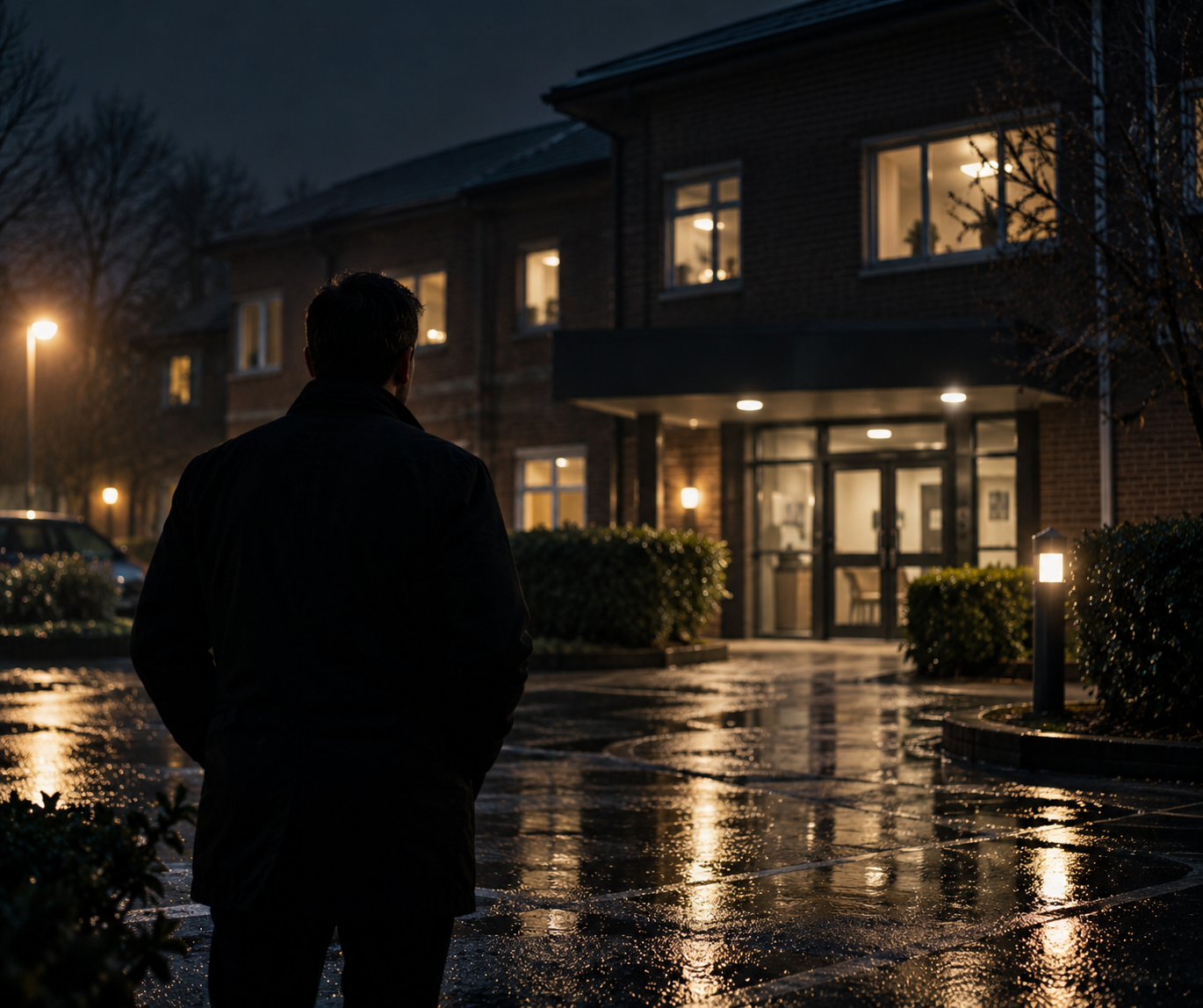

Nathan notices things.
The fire door that shouldn't be open.
The paperwork that doesn't quite match the reality.
The staff member who's stopped questioning something because it's been happening for too long.
The person being supported whose voice has somehow become quieter than everybody else's.
At first, Nathan believes the answer is straightforward.
See the problem.
Record it.
Challenge it.
Fix it.
But St Domingo House doesn't work like that.
Every decision affects somebody else.
Every challenge creates another conversation.
Every improvement has a cost, a consequence or somebody asking why it needs to happen at all.
And Nathan isn't standing outside the system looking in.
His name is on it.
He's the Registered Manager.
When the service succeeds, he's responsible.
When it fails, he's responsible.
And the more determined he becomes not to let the people at St Domingo House disappear inside the system, the easier it becomes for Nathan to disappear inside it himself.
Nathan isn't a hero.
He gets things wrong.
He pushes too hard sometimes. Takes too much home. Believes responsibility means carrying things that were never meant to belong to one person.
But underneath all of it is something he refuses to let go of:
the people being supported have to matter more than the system supporting them.
DO NOT DISAPPEAR
INTO THIS PLACE.

DON’T TAKE MY WORD FOR IT.
STEP INSIDE ST DOMINGO HOUSE.

The email arrived at 08:07 on a Tuesday morning. Nathan Kearns almost ignored it. Not because he was careless, because by this point, his inbox had become a kind of psychological warfare exercise disguised as communication.
Forty-three unread emails before breakfast usually meant at least two rota crises, one housing excuse, three unnecessary CC chains from Vinny trying to sound managerial, somebody reporting missing yoghurts like it was organised crime, and at least one passive-aggressive reminder from Susan Byrne involving the phrase gentle reflection.
So initially, he barely looked. Coffee first. Survival first.
The office flat felt colder than usual, damp somehow despite the radiators rattling loudly enough to sound offended. Rain tapped steadily against the windows in thin, relentless streaks while downstairs somebody argued with Robbie about whether sharks could have toast.
Nathan could already hear Kelly losing patience.
“No, lad,” she sighed from somewhere below, “sharks don’t eat Kingsmill.”
There was a pause.
Then Robbie, louder:
“THIS ONE DOES.”
Nathan almost smiled. Almost.
He dropped his bag onto the desk, rubbing sleep from eyes that still hadn’t properly recovered from Kayleigh’s cardiac arrest, then opened Outlook.
The subject line stopped him immediately.
Potential Unannounced Inspection – Service Concerns Received.
His stomach dropped before he even clicked it.
Funny how some phrases in care changed your breathing instantly.
Safeguarding. Medication error. Coroner. CQC.
Words that bypassed logic completely and landed straight in instinct.
Forty-three emails.
Missing yoghurt.
Sharks eating Kingsmill.
And four words that can change a manager's entire day.
Welcome to St Domingo House.
An ordinary Tuesday morning. Until it isn't.

REGISTERED
THE NAME ON THE PAPERWORK
IS ONLY THE BEGINNING.
A service in trouble.
A manager determined to change it.
Staff trying to survive it.
And people depending on all of them to get it right.
Registered goes behind the policies, inspections and reassuring language to look at the human beings living and working inside the system.
The brilliant.
The broken.
The people who care.
And the people who have forgotten why they're there.
THE SYSTEM HAS POLICIES.
THE PEOPLE HAVE CONSEQUENCES.
Somebody still has to put their name to it.
A novel of care, power & survival.