
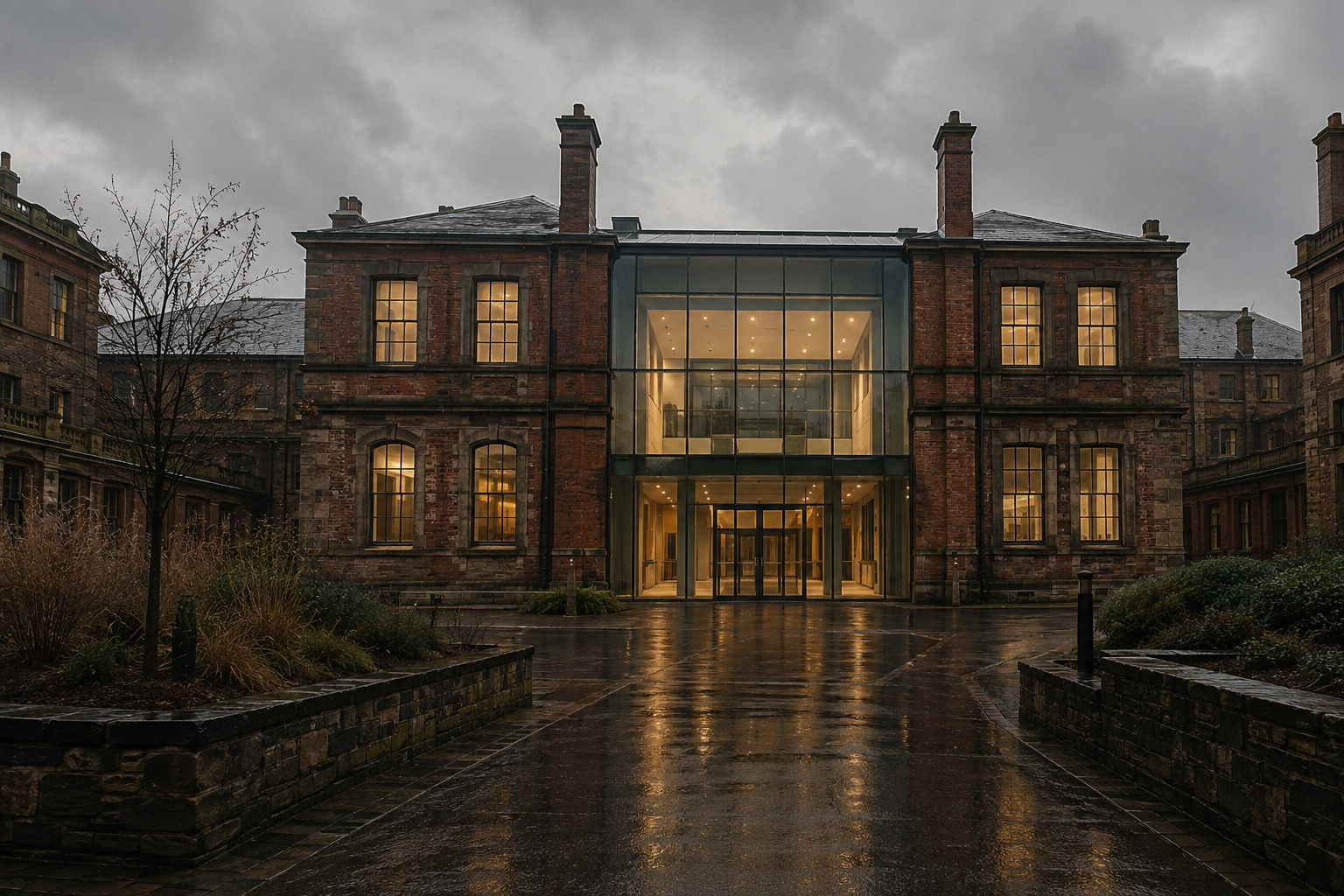
THE HOLLOWS · BOOK V
THE REOPENING
They preserved the building.
They should have been more careful with its history.
Liverpool, 2025.
The Hollows has reopened.
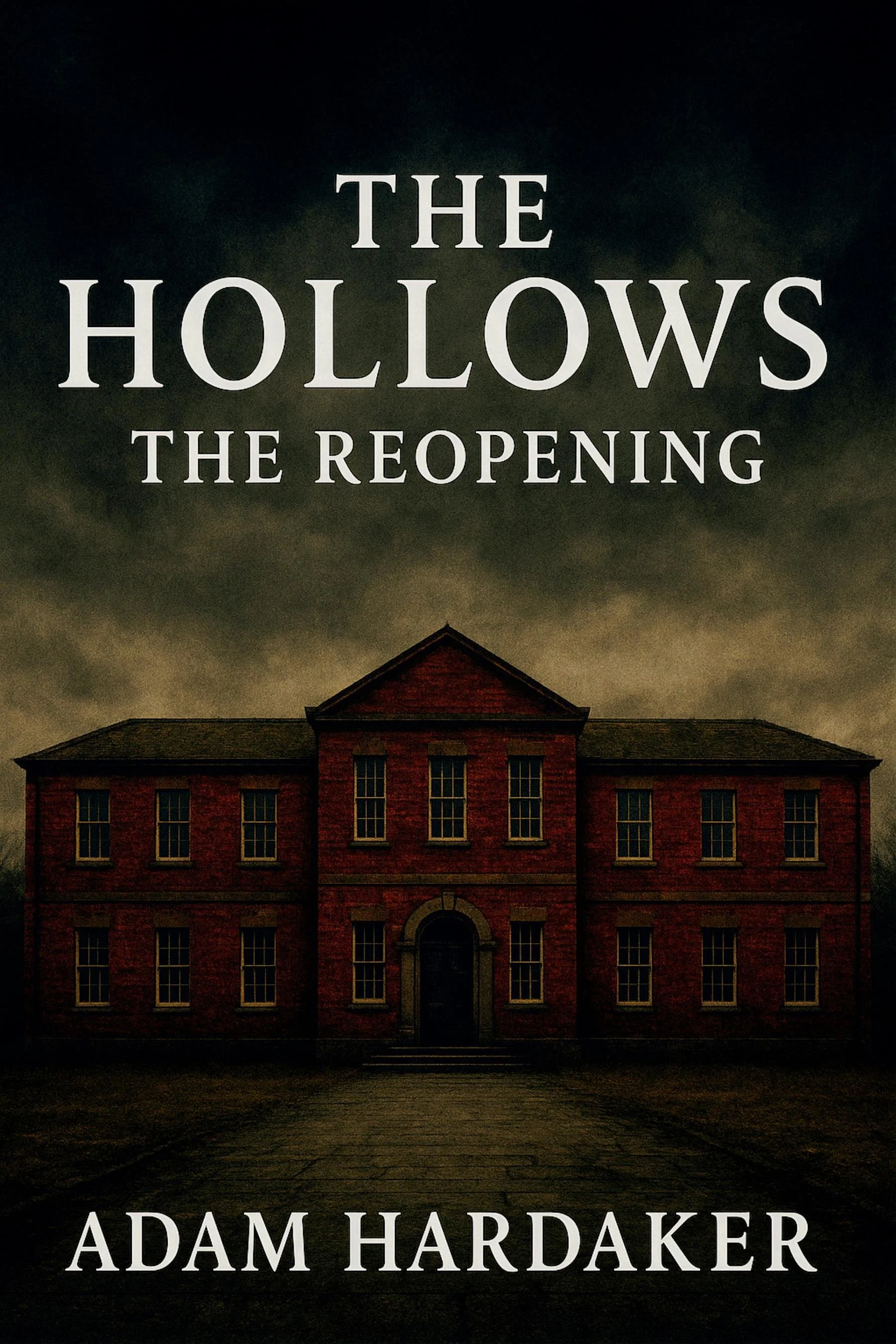
The locked institution has become something else - restored, presented and carefully explained to a public invited to walk through its history.
There are plaques now. Exhibitions. Official accounts of what happened behind its walls.
Jodie Wakefield arrives looking for a story.
Her eight-year-old son, Milo, hears something else.
And as Jodie begins pulling at the gaps between what The Hollows remembers and what its new custodians are willing to admit, the past begins finding its own ways to speak.
The doors are open again.
So are the records.
THE HOLLOWS · BOOK V · THE REOPENING · HISTORICAL FICTION · DARK FICTION · 1852

THE STORY
THEY REOPENED THE BUILDING.
NOT THE WHOLE STORY.
The Hollows has become history. At least, that's the version being presented.
Liverpool, 2025.
The doors of The Hollows are open again.
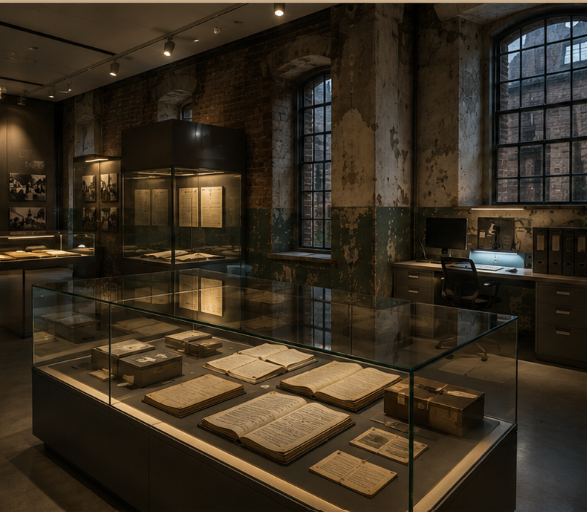
Restored and repackaged, the institution has become a place where its past can be displayed, interpreted and explained.
Jodie Wakefield arrives as a journalist looking for the story behind the reopening.
What she finds is a version of The Hollows that is remarkably neat.
The records tell one story.
The building remembers another.
And as Jodie begins looking more closely at what has been preserved - and what has been left out - an old Wakefield name finds itself inside The Hollows once again.
Some histories aren't finished just because somebody puts them behind glass.
IT'S NOT REALLY ABOUT HISTORY.
Well... not entirely.
History gives The Reopening its foundations.
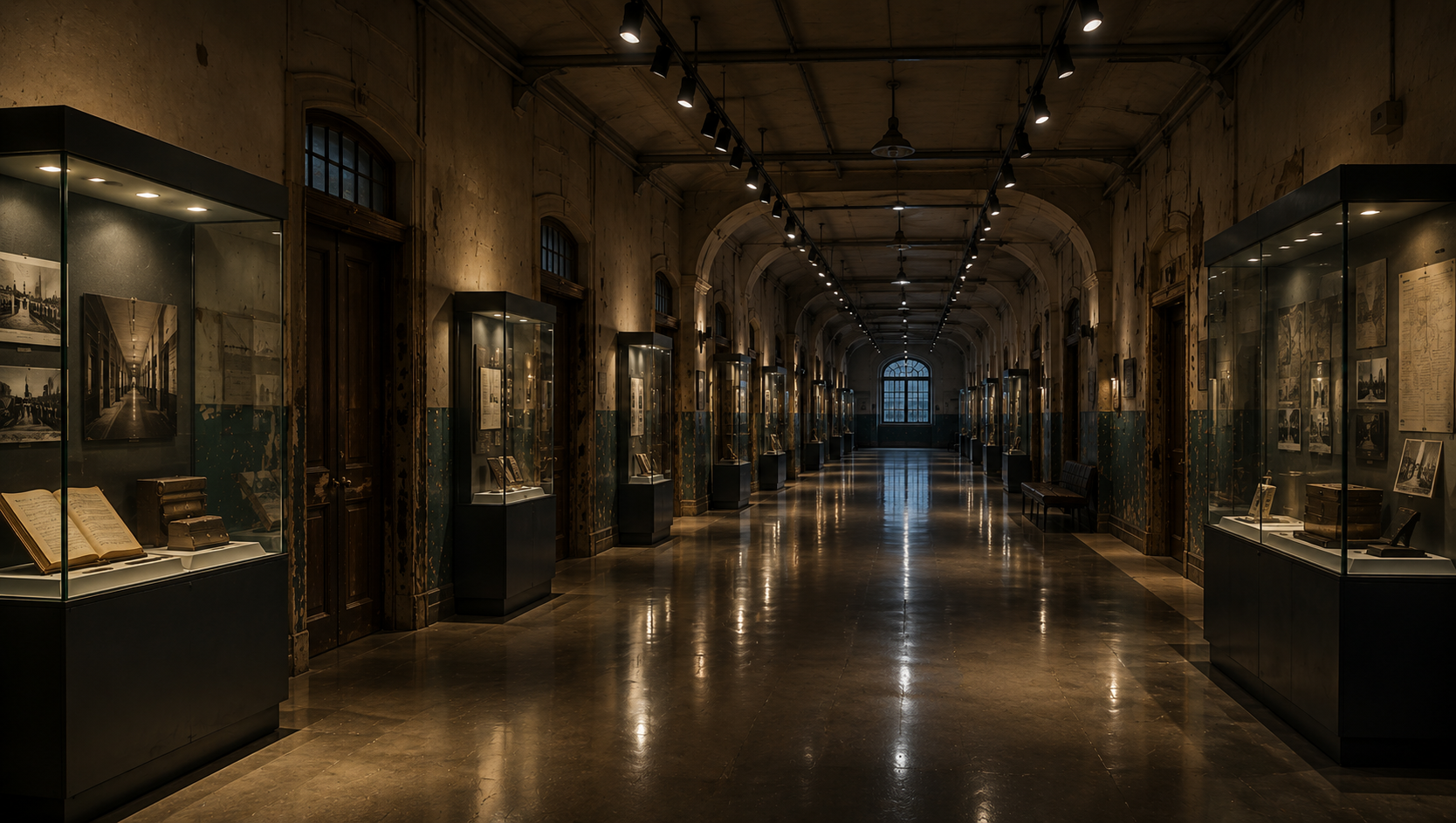
The records. The exhibitions. The carefully preserved pieces of a place everybody believes belongs safely in the past.
But this isn't really a story about what happened decades ago.
It's about who gets to decide which version of the past survives.
By 2025, The Hollows has been restored.
Its doors are open. Its history has been organised, interpreted and presented to the public.
Everything has a version.
The plaques have one.
The records have another.
The people who lived through it sometimes had neither.
Jodie Wakefield arrives believing that if you look hard enough, the truth will eventually reveal itself.
But institutions are remarkably good at telling their own stories.
And sometimes what has been left out matters more than what has been put on display.
The Hollows has finally opened its doors. Now it has to answer for what's behind them.

SOME HISTORIES ARE PRESERVED.
OTHERS ARE EDITED.
The doors are open. That doesn't mean everything is on display.
In the world of The Reopening, The Hollows is no longer an institution.
It's history.
The building has been restored. Its past has been researched, organised and presented to the public.
There are exhibitions. Records. Carefully written explanations of what happened here.
But deciding how history is remembered also means deciding what gets included.
A record can preserve somebody's voice.
An exhibition can give it back.
But institutions can also choose the version of themselves they're most comfortable displaying.
For Jodie Wakefield, the question isn't whether The Hollows remembers its past.
it's who gets to decide which version everybody else remembers.
INSIDE THE HOLLOWS
WHY I WROTE IT
BEHIND THE BOOK
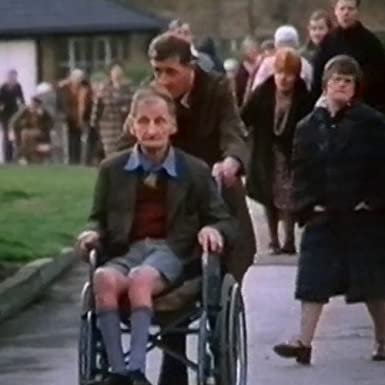
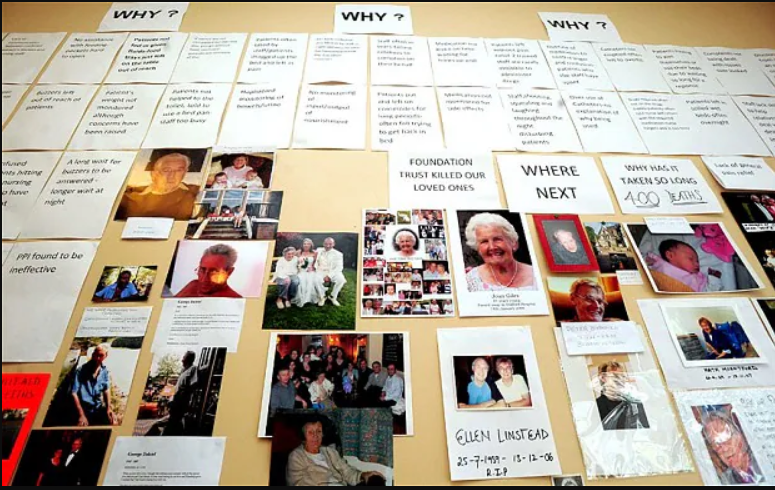
Because this isn't just history.
Across The Hollows, the building changes.
The language changes. The treatments change. The rules change.
And with every generation, people convince themselves that the worst of what came before couldn't happen again.
But it can.
And it does.
I've spent nearly thirty years working in health and social care. I've worked alongside some incredible people and seen what good support can do when people have the time, resources and freedom to actually provide it.
But I've also seen a sector expected to do more and more with less and less.
Funding is still shite.
Services are stretched. Staff are stretched. Vacancies are difficult to fill. Good people burn out. Managers spend their time trying to make impossible numbers work while the people actually needing support are caught in the middle.
And that's where this stops being simply a story about individual bad practice.
Because you can write all the policies you like.
You can change the terminology. Introduce another procedure. Hold another meeting. Produce another action plan.
But if the people delivering support don't have the resources, staffing and time to do it properly, eventually something gives.
Too often, it's the person being supported.
And sometimes it's the staff member who came into this work because they genuinely wanted to make somebody's life better.
Both deserve better.
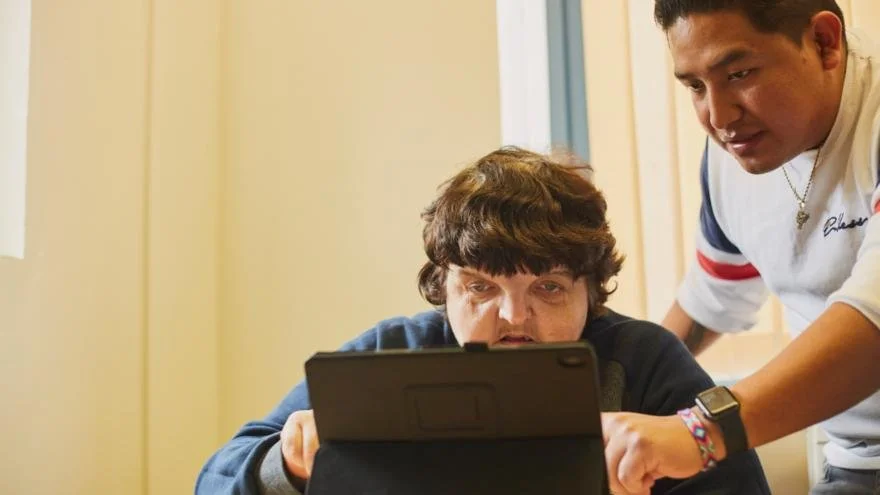
The people receiving support deserve lives built around dignity, choice, safety and being listened to.
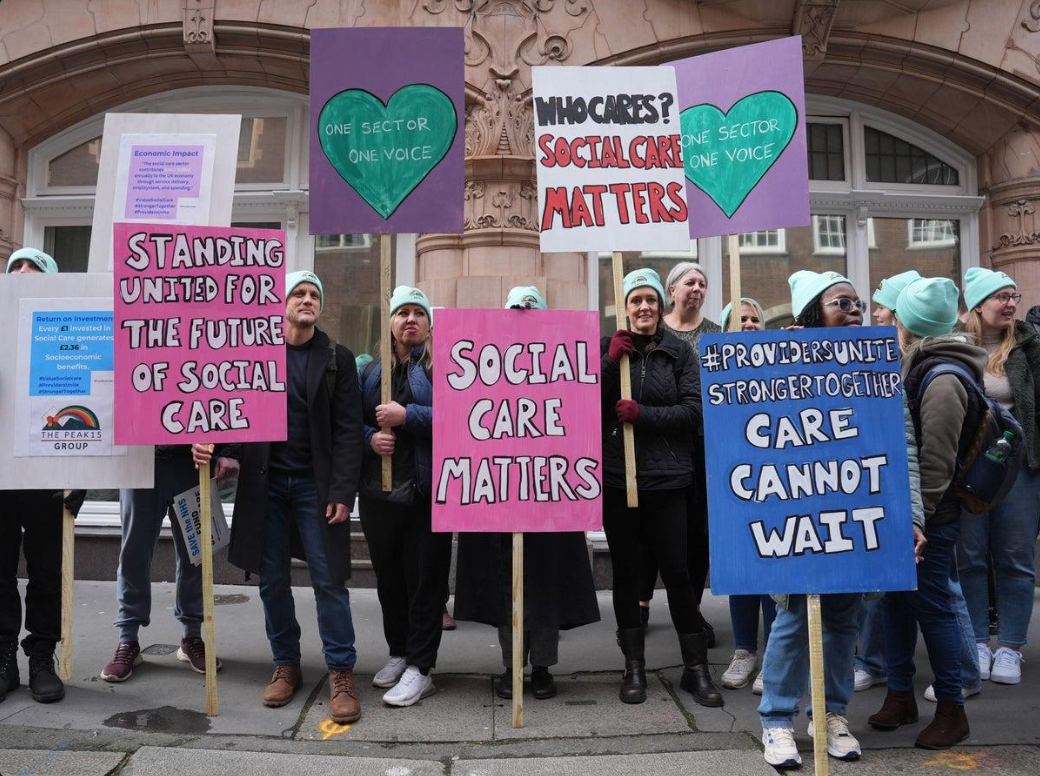
The people providing that support deserve proper funding, training, staffing, leadership, pay and the time to actually care.
That's why The Reopening couldn't simply end by exposing what happened inside a fictional institution generations ago.
Because some of the things running through these five books haven't disappeared.
They've changed their names.
They've changed their language.
Sometimes they've changed their buildings.
But they're still happening.
And if The Hollows has one thing to say after five books, it's this:
If we forget what happened to people in the past, we make it far easier to allow it to happen to people again.
We have to see it.
We have to talk about it.
And when the system isn't good enough — for the people receiving support or the people trying to provide it — we have to demand better.
Because if we forget the past, we're doomed to repeat it.
— Adam

AT THE HEART OF THE STORY
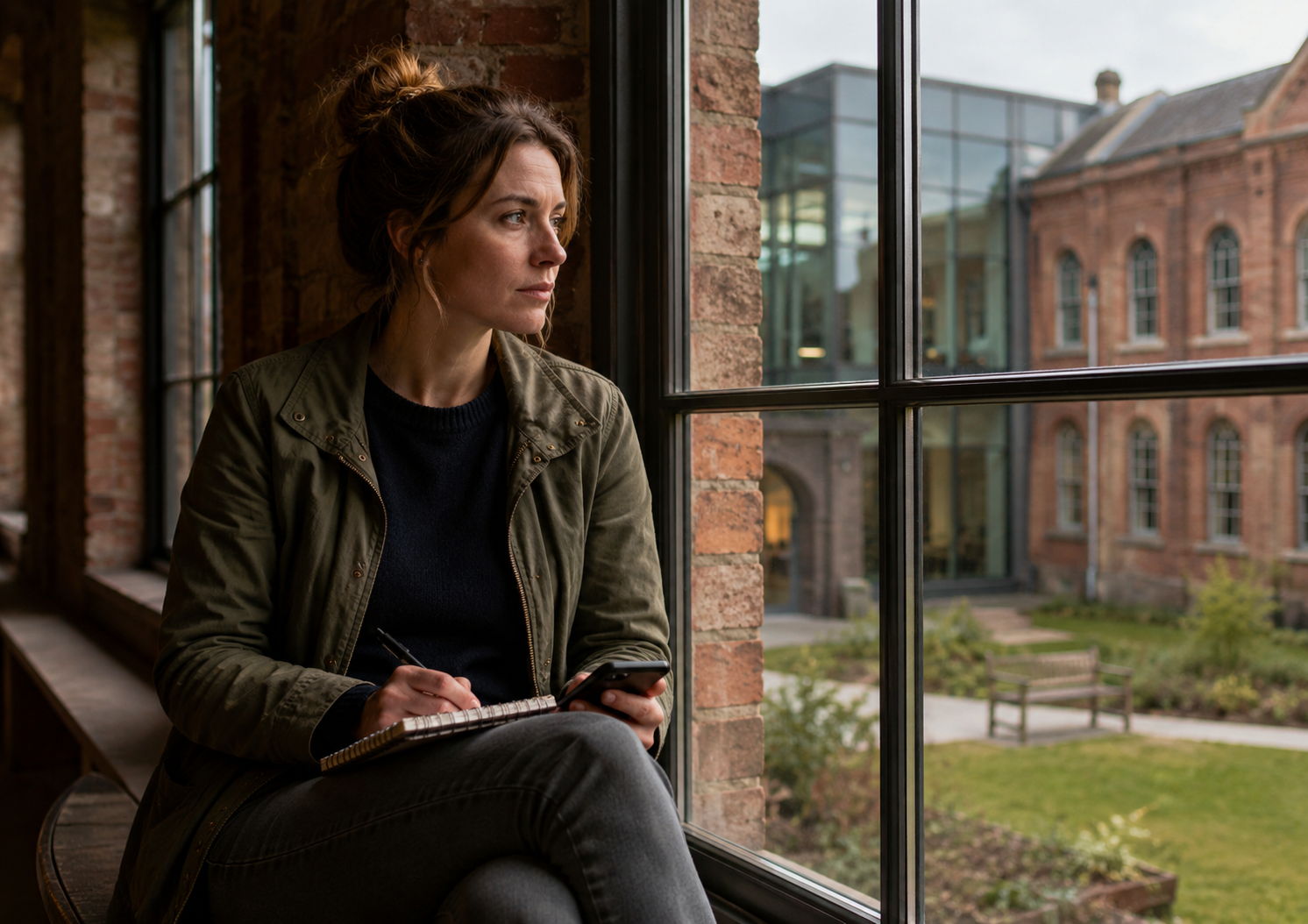
JODIE WAKEFIELD
She came looking for a story. She found one her family had been part of for generations.
Jodie is a journalist.
She asks questions for a living. She looks beyond the version she's given and notices when something doesn't quite add up.
So when The Hollows reopens, carefully restored and ready to present its history to the public, Jodie does what comes naturally.
She starts digging.
At first, she's looking into the building.
The records. The exhibitions. The stories chosen to represent generations of people who lived behind its walls.
But the deeper Jodie goes, the harder it becomes to separate that history from her own.
Because the Wakefield name has been inside The Hollows before.
Again and again.
And this time, Jodie isn't alone.
Her eight-year-old son Milo experiences the world differently, and as mother and journalist, Jodie understands something The Hollows has repeatedly failed to understand across its history:
being different doesn't make somebody's voice less important.
The Hollows has spent generations allowing other people to decide which voices belonged in the record.
Jodie intends to find the ones that didn't.
The Hollows spent generations writing the Wakefields into its history.
Jodie Wakefield came back to read between the lines.
DON'T TAKE MY WORD FOR IT.
ENTER THE HOLLOWS.
Read a little of The Reopening for yourself.

When she returned to her desk, an email waited.
Re: FOI Request – Ward C (1975)
Thank you for your enquiry. We regret that records for Ward C, 1975–76, were affected by environmental damage during offsite storage. Only partial copies remain. Please see attached.
She opened the PDF.
Clinical. Tidy.
Observation Interval: 20 mins. Calm restored.
Patient Doyle, P: expired naturally.
No strike. No MW. No erythema. No lip abrasion.
The wrong version had been replaced by the tidy one.
Her pulse hammered. They had given her a copy of the copy that never existed.
The records survived.
The truth was another matter.
THE HOLLOWS
THE STORY CONTINUES.
The doors are open.
The story finally is too.
Jodie Wakefield came to The Hollows looking for its history.
What she found was generations of people whose lives had been recorded, interpreted and sometimes rewritten by those with the power to decide what became official.
Eliza. Edith. Reuben. Dora.
Different lives. Different eras.
The same building.
The Hollows survived every attempt to change it.
But so did the voices of the people who passed through its doors.
Some were written down.
Some were hidden.
Some had to wait generations to be heard.
The Hollows doesn't get the final word anymore.
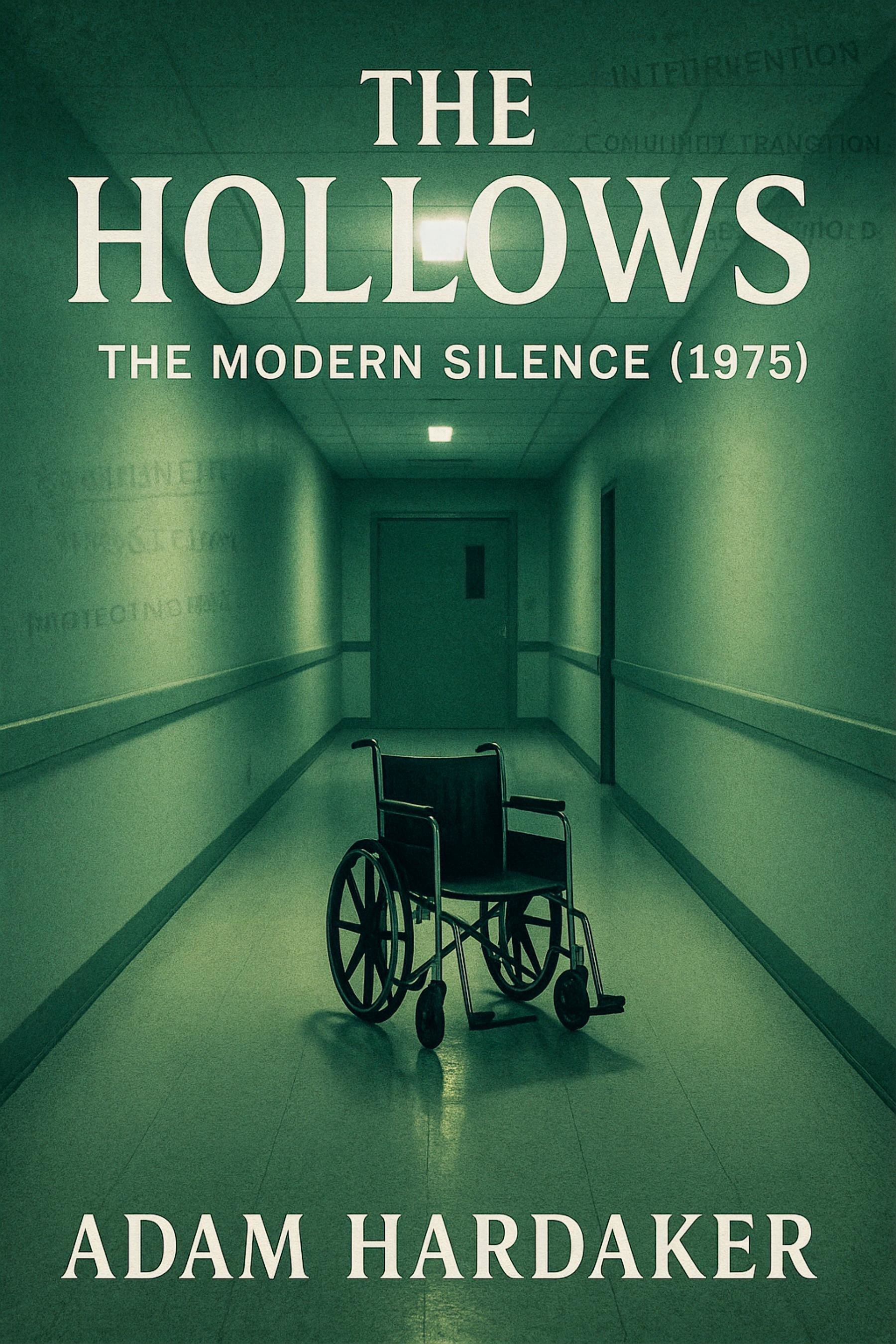
IV — THE MODERN SILENCE
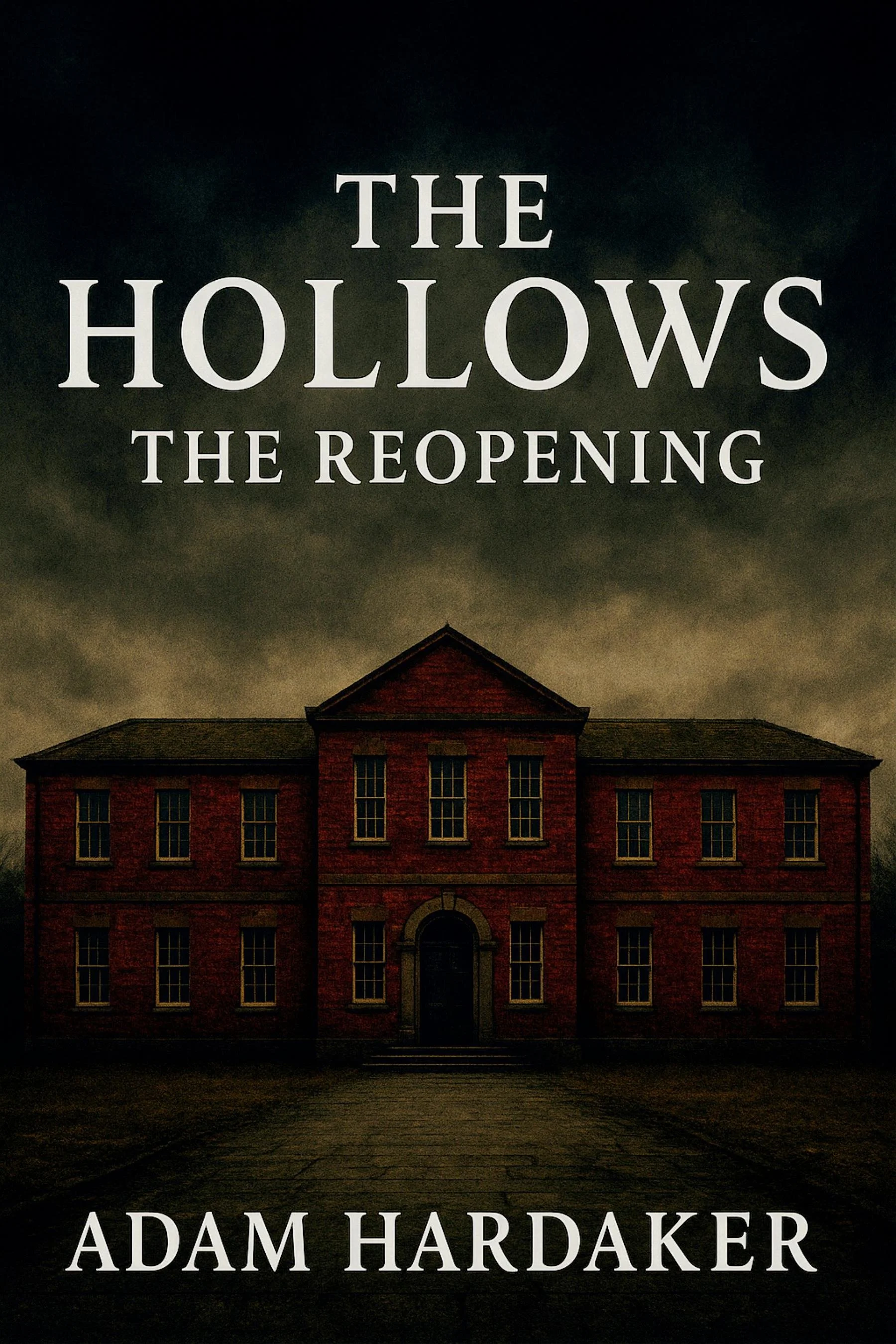
V — THE REOPENING
SOME PLACES DON'T FORGET.