
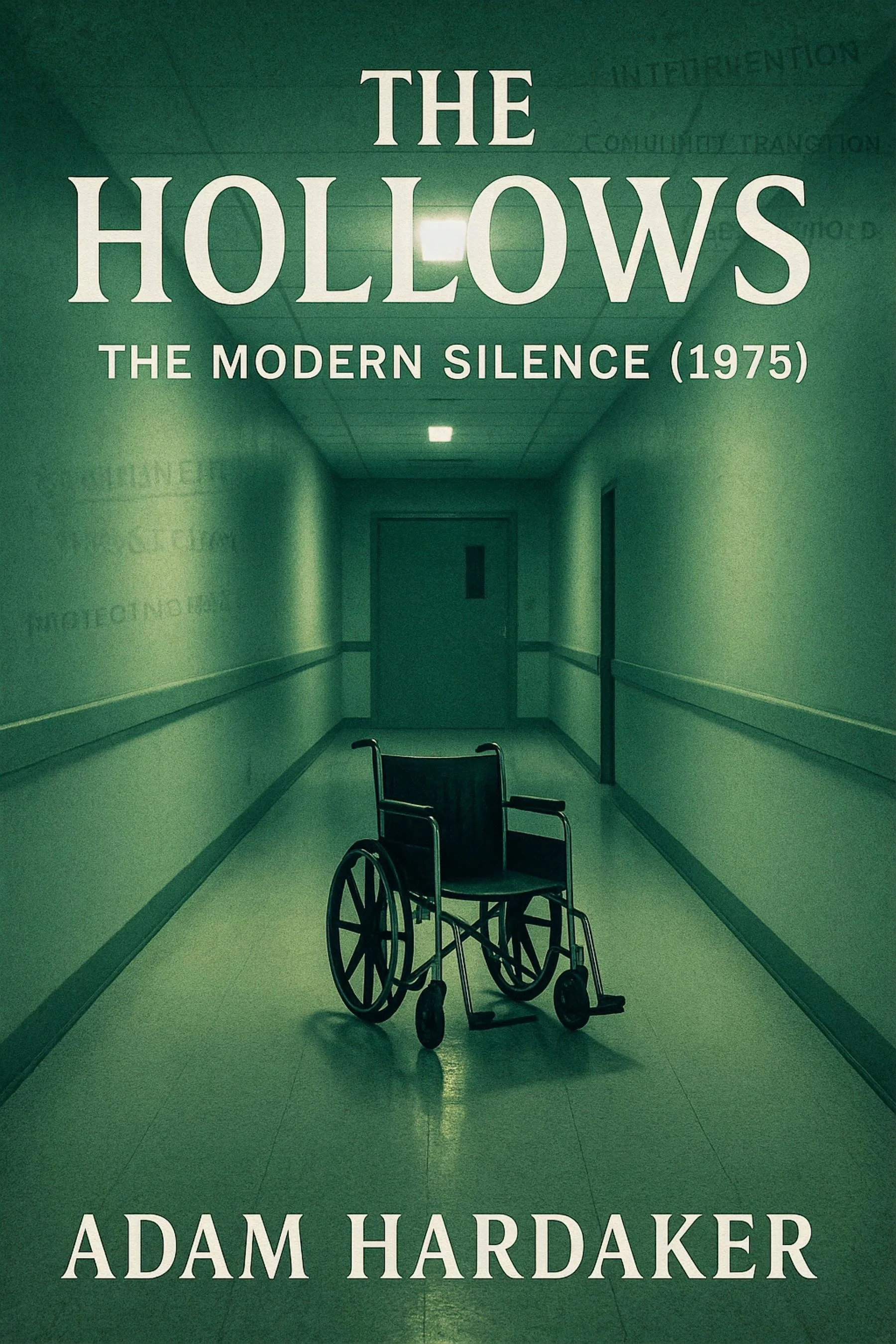
THE HOLLOWS · BOOK IV
THE MODERN SILENCE
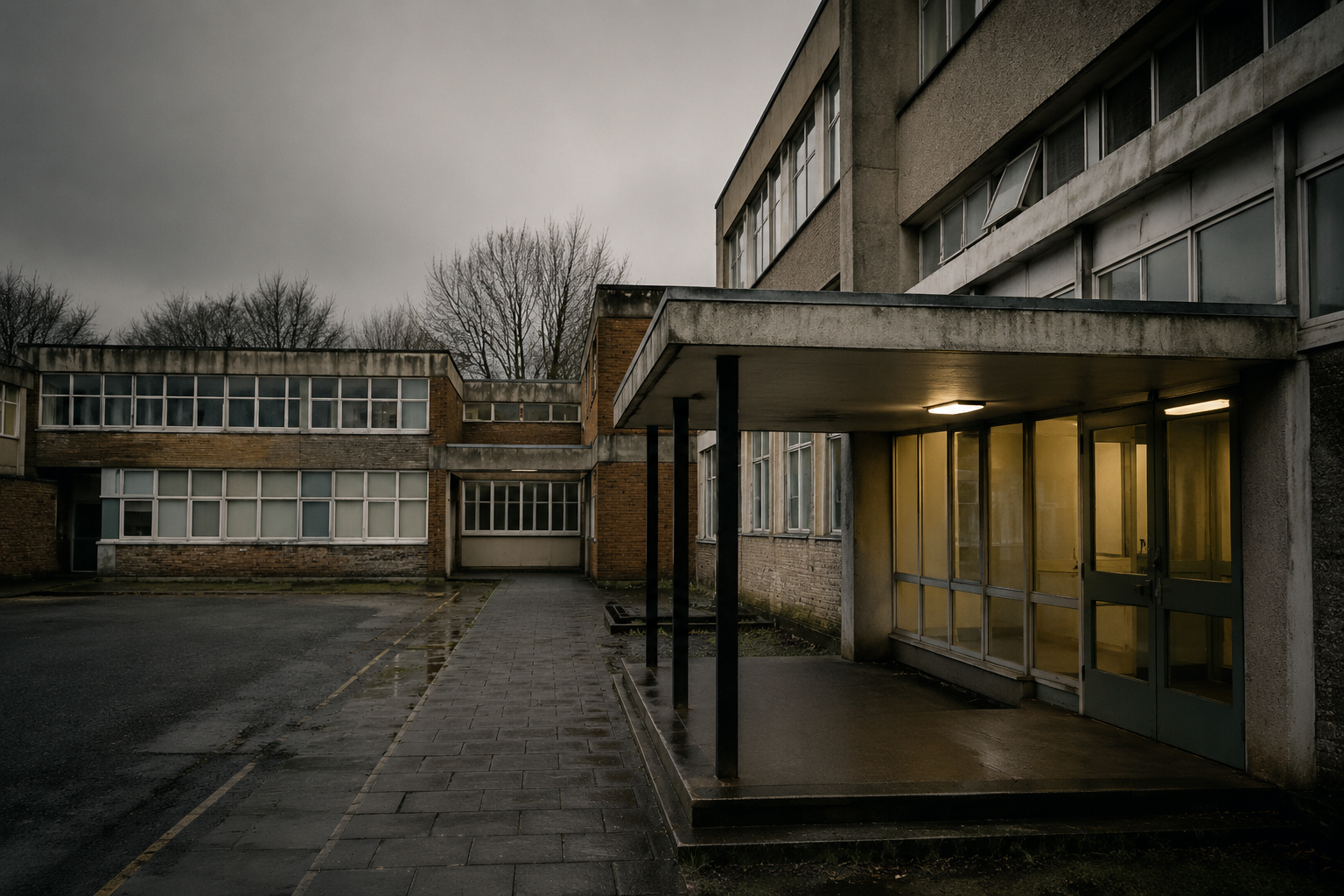
The building had changed. The silence hadn't.
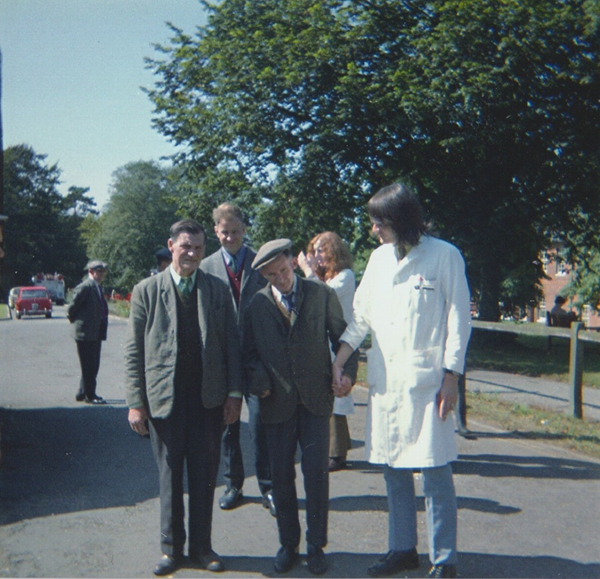
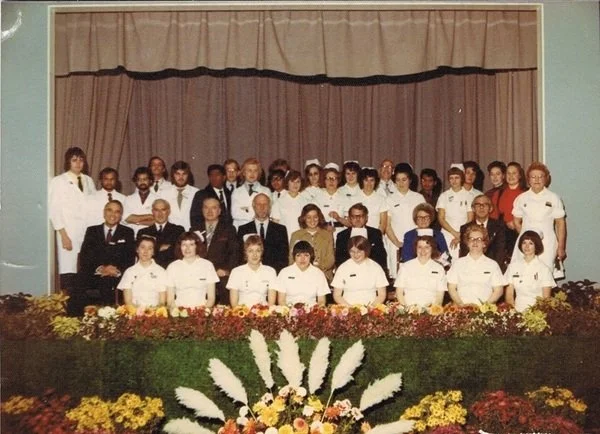
Liverpool, 1970s.
The Hollows belongs to a different age now.
The old language has softened. The methods have changed. There are committees, reports, policies and professionals where once there were simply men convinced they knew best.
On paper, everything looks more civilised.
But behind the doors, people can still disappear into routines they didn't choose, decisions they weren't part of and records written by somebody else.
The cruelty isn't always obvious anymore.
Sometimes it looks remarkably ordinary.
The Hollows has learned how to hide in plain sight.
THE HOLLOWS · BOOK IV THE MODERN SILENCE · HISTORICAL FICTION · DARK FICTION · 1852

THE STORY
THE BUILDING HAD CHANGED THE POWER HADN’T.
The Hollows looks different now. That doesn’t mean everything inside it is different.
Liverpool, 1975.
The old institution has been modernised.
The corridors are brighter. The language is softer. There are policies, meetings and records intended to show that things have moved forward.
And in many ways, they have.
But people can still be spoken about rather than spoken to.
Decisions can still be made behind closed doors. Concerns can be recorded, filed away and forgotten. And when something goes wrong, the system can become remarkably good at protecting itself.
The silence inside The Hollows is no longer enforced by locked doors alone.
Sometimes all it takes is nobody willing to speak.
IT'S NOT REALLY ABOUT SILENCE.
Well... not entirely.
Silence gives The Modern Silence its atmosphere.
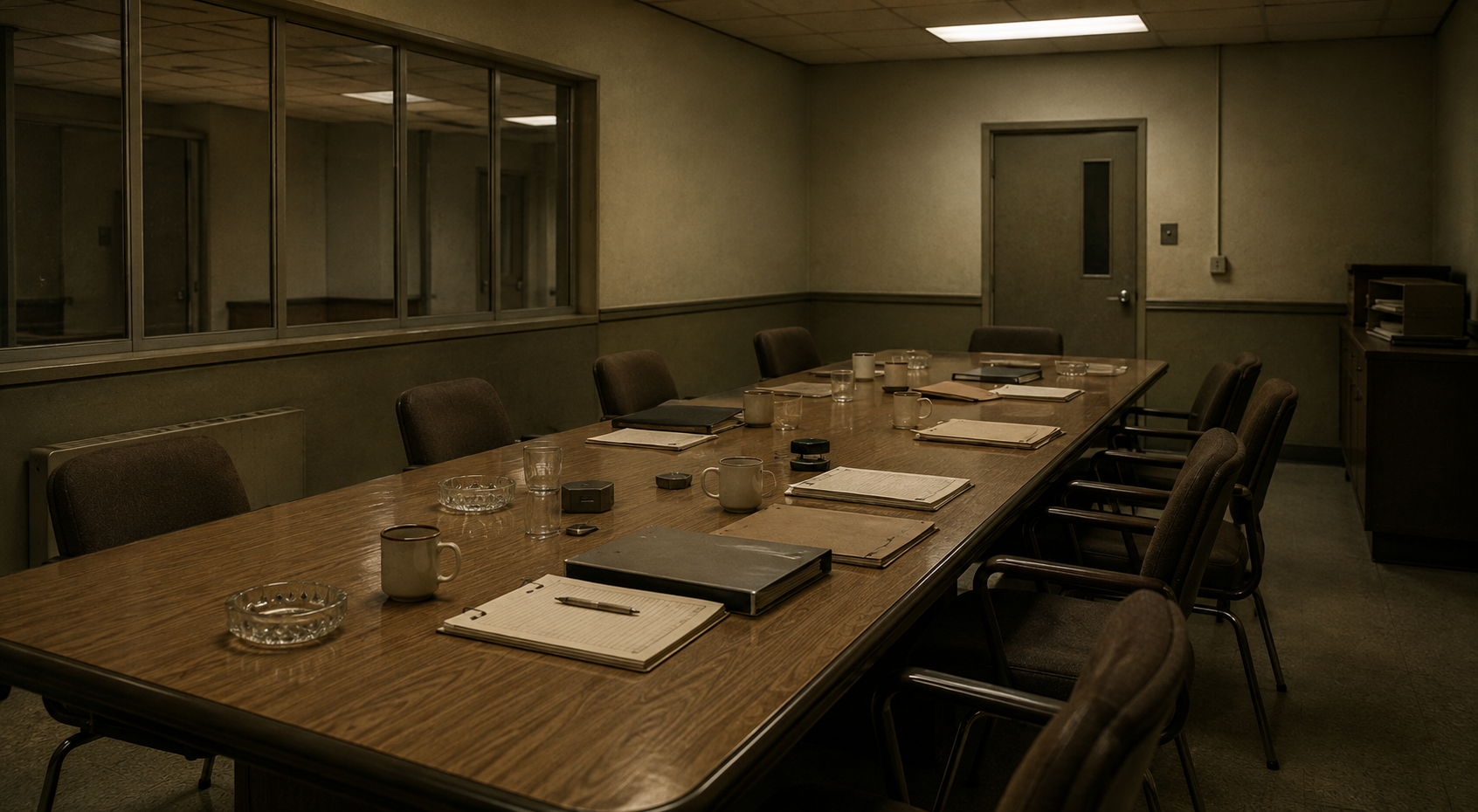
The closed doors. The quiet corridors. The conversations that happen in offices rather than in front of the people they're about.
But this isn't a story about nobody speaking.
It's about what happens when everybody assumes somebody else will.
By 1975, The Hollows looks different.
The old methods have disappeared. The language has changed. There are policies, procedures, meetings and records where once there was simply authority.
Everything appears more professional.
More accountable.
More humane.
And yet people can still be ignored.
Concerns can be softened into paperwork. Decisions can be defended as procedure. Responsibility can pass from one desk to another until nobody seems responsible at all.
Because institutions don't need everybody to be cruel for harm to continue.
Sometimes they simply need enough good people to stay quiet.
The Hollows doesn't demand silence anymore. It has learned to depend on it.

INSIDE THE HOLLOWS
EVERYONE KNEW THE SYSTEM.
THAT DIDN'T MEAN ANYONE
QUESTIONED IT..
The language had changed. The balance of power hadn't.
In the world of The Modern Silence, The Hollows believes it has left its darkest years behind.
There are policies now. Procedures. Meetings. Reviews.
People are discussed more carefully. Decisions are documented. Everything has a process.
But a process can still fail the person it's supposed to protect.
Concerns can be minimised. Responsibility can be passed on. And when everybody works within the same system, something harmful can begin to look completely ordinary.
Nobody has to order people to stay silent.
Sometimes silence comes from something much simpler.
People knowing something isn't right — and believing it isn't their place to challenge it.
what happens when everybody follows the rules, but nobody asks whether the rules are right?
WHY I WROTE IT
Because cruelty doesn't always look cruel.
BEHIND THE BOOK
By the 1970s, places like The Hollows were supposed to belong to a different world.
The language was changing. Old practices were being questioned. There was greater awareness of people's rights, and increasingly serious conversations about what institutional care should actually look like.
That mattered. Progress was real.
But changing the language doesn't automatically change a culture.
Through nearly thirty years working in health and social care, I've seen how easily the person at the centre of a service can disappear behind everything built around them.
Policies. Meetings. Reviews. Records. Procedures.
All of them can be necessary.
But none of them mean very much if nobody listens when something isn't right.
That's what interested me about The Modern Silence.
Not an institution where everybody is deliberately cruel, but something I find more uncomfortable:
a system containing ordinary people who become so accustomed to how things are done that they stop asking whether they should be done that way at all.
The Hollows has changed enormously since Eliza Wakefield first walked through its doors.
By 1975, it knows all the right words.
The question is whether anybody inside is still prepared to say the difficult ones.
— Adam

AT THE HEART OF THE STORY
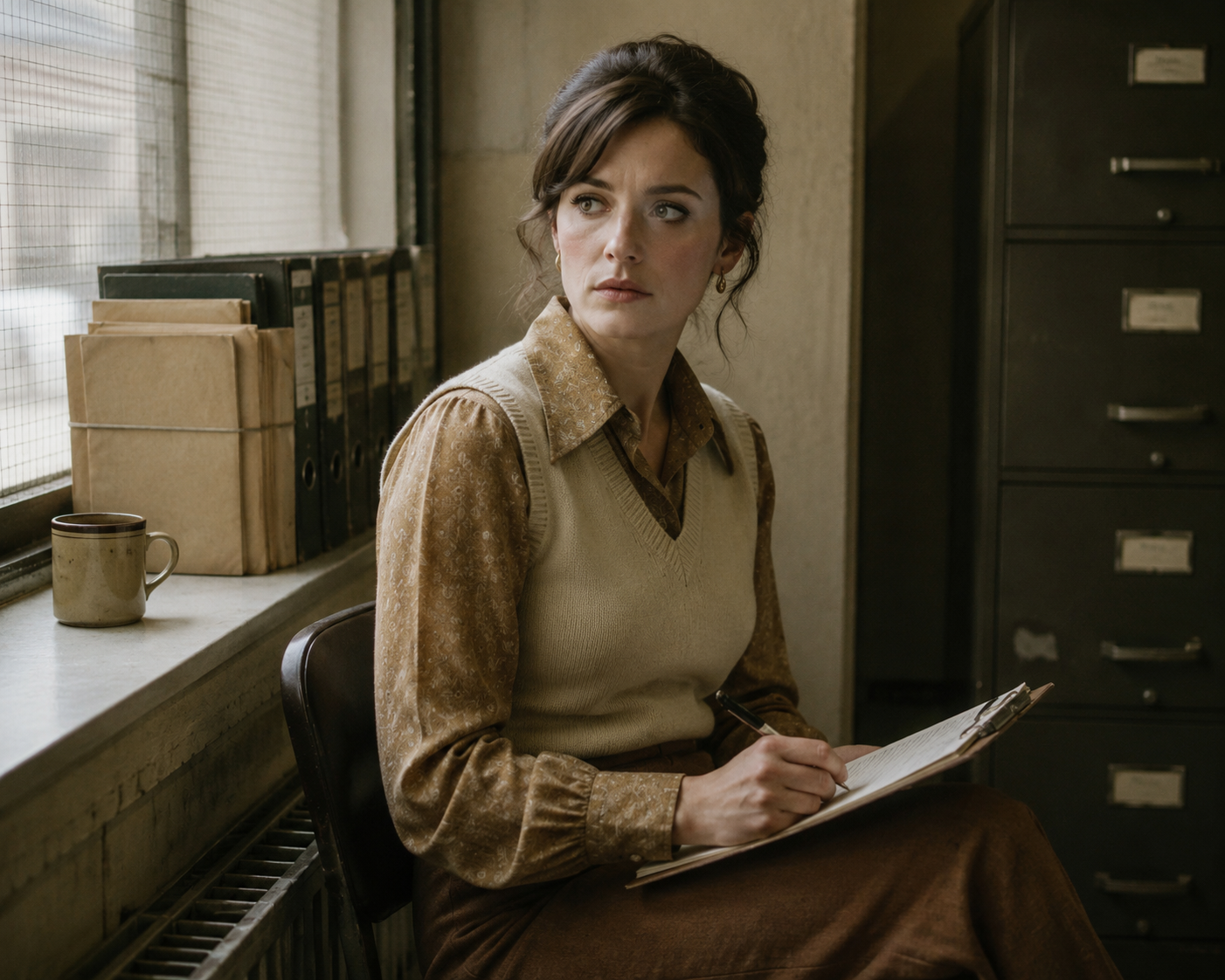
EDITH MALLORAN
She believed writing things down was how you stopped them disappearing.
Dora arrives at The Hollows believing in records.
In 1975, that feels like progress.
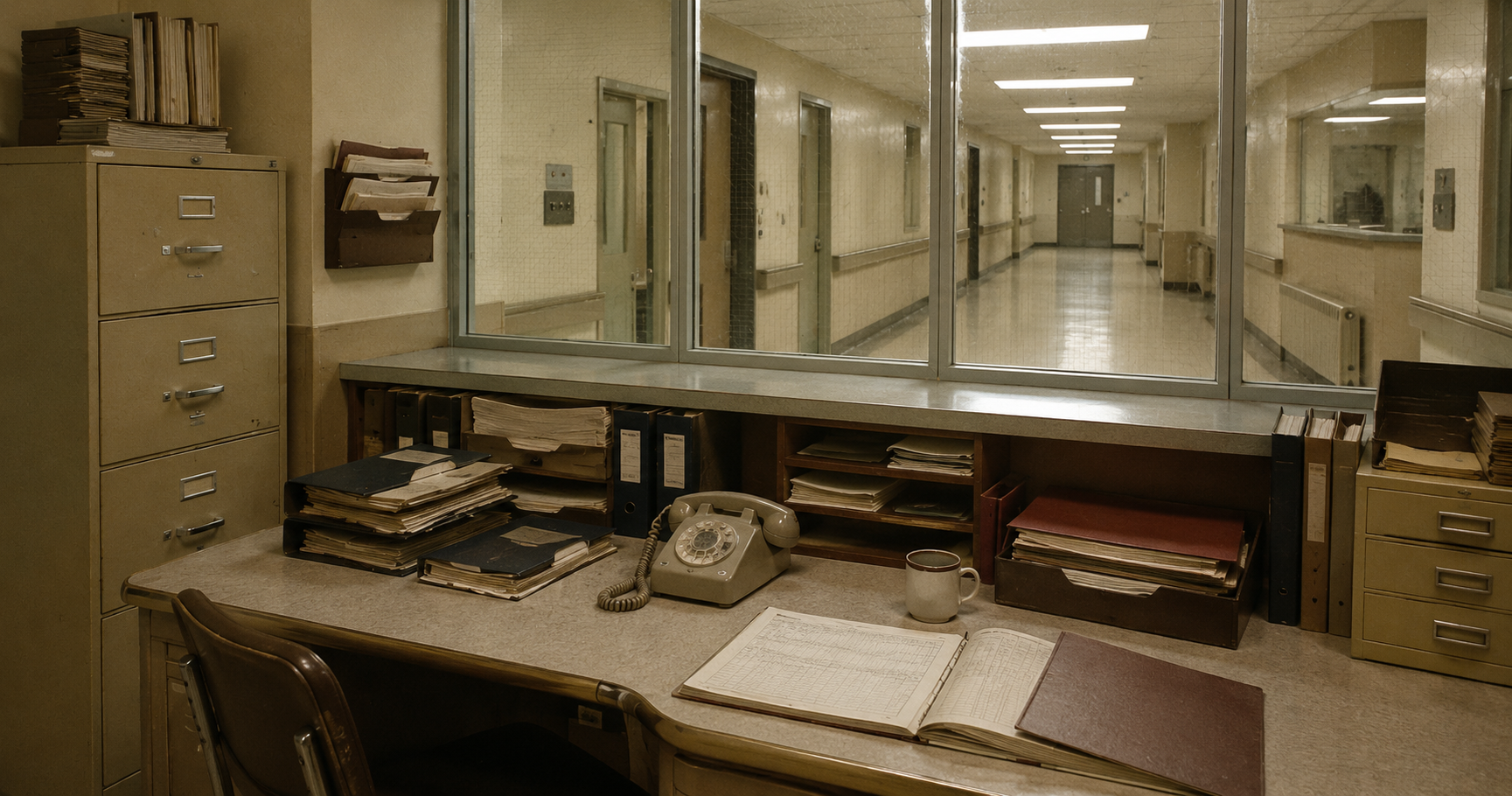
There are minutes. Memos. Procedures. Oversight. A paper trail that should make it harder for people to be forgotten.
And Dora believes in it.
At first.
But the deeper she goes into the records of The Hollows, the more she begins to understand that writing something down doesn't necessarily make it true.
A record can protect someone.
It can also protect an institution.
And when Dora begins to see the distance between what happens inside The Hollows and the version that eventually reaches the file, she has a choice.
Accept the official version.
Or make sure another one survives.
Dora chooses the record.
Just not the one The Hollows wanted her to write.
The Hollows had spent generations writing other people's stories.
Dora Wakefield decided there should be another version.
DON'T TAKE MY WORD FOR IT.
ENTER THE HOLLOWS.
Read a little of The Physic of Men for yourself.
Patricia’s eyes searched her face. “Write me.”
Dora’s throat tightened. “Write… you?”
“Yes. Before they say.” Patricia pressed her palm to the rail, then her own chest, then the air, as if connecting all three.
Later, Simmons handed Dora a bundle of requisitions.
Tucked between them was a folded scrap—childish handwriting, uneven lines. Dora opened it carefully.
Patricia. 1961. I am good. I can wash dishes. I can count money. I am not mad. Please.
Dora stared at the plea, her chest aching. The ink had blotted in places, as though it had been written in a rush, or with tears nearby.
The Hollows has spent years writing Patricia's story.
Now she's asking Dora to write hers.
THE HOLLOWS
THE STORY CONTINUES.
Some silences are louder than anything written down.
Dora Wakefield's story belongs to another chapter of The Hollows.
But the institution survives.
The files remain.
The meetings continue.
The records keep growing.
By now, The Hollows knows how to explain itself.
Every decision can be documented.
Every concern can be discussed.
Every failure can disappear beneath another piece of paper.
But records have a habit of surviving the people who wrote them.
And eventually, somebody else will open the door.
The Hollows has kept its secrets for generations. It won't keep them forever.
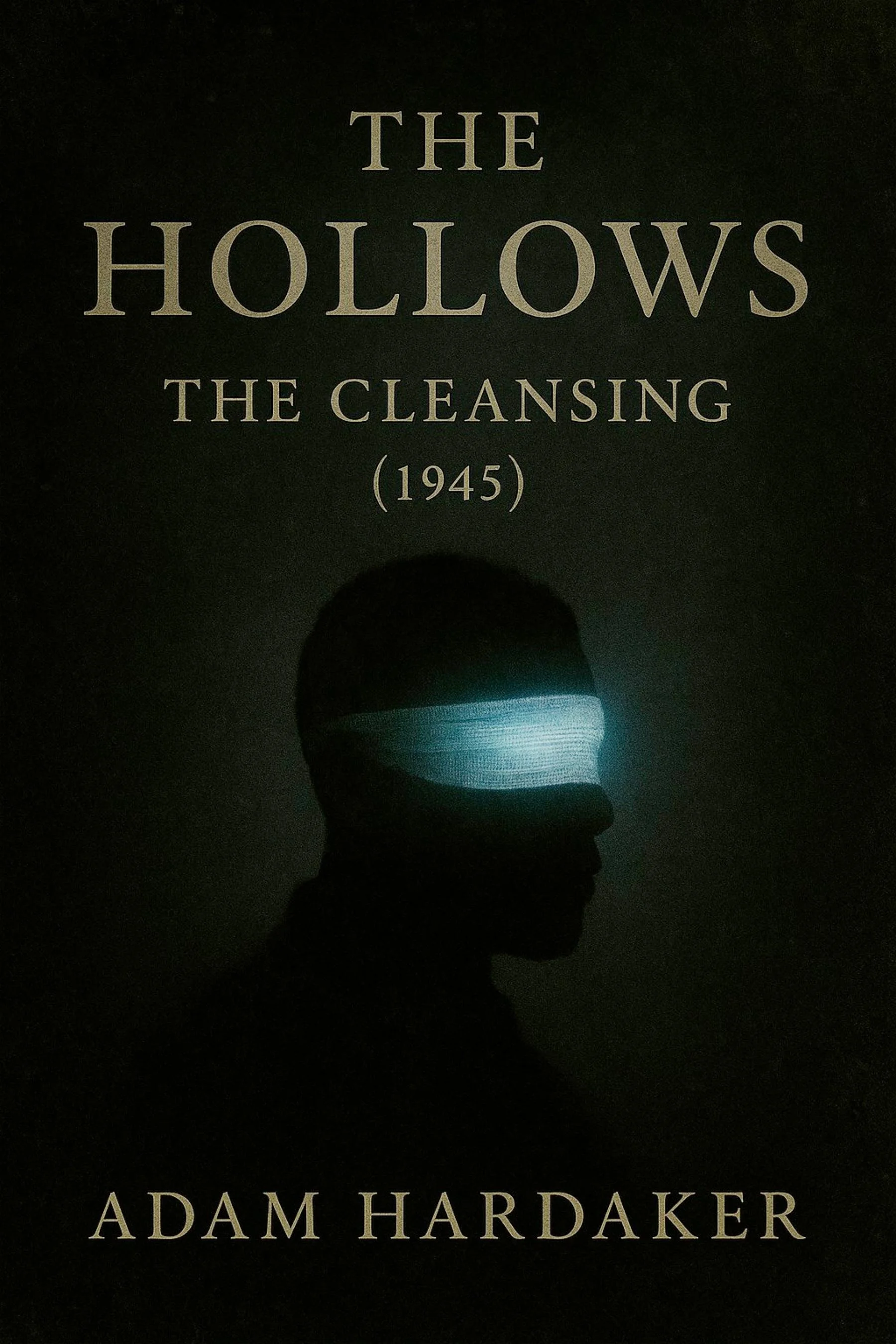
III — THE CLEANSING
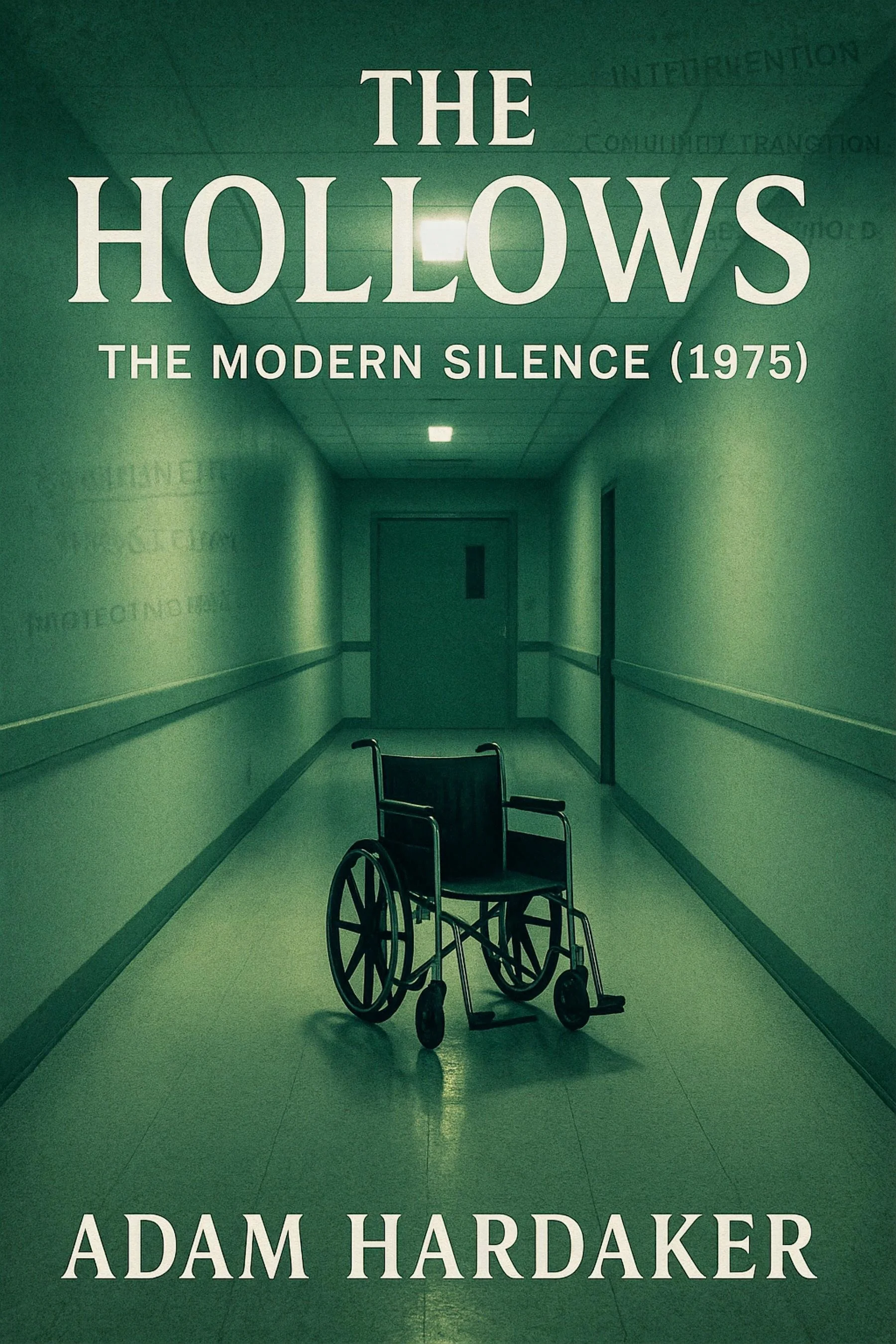
IV — THE MODERN SILENCE
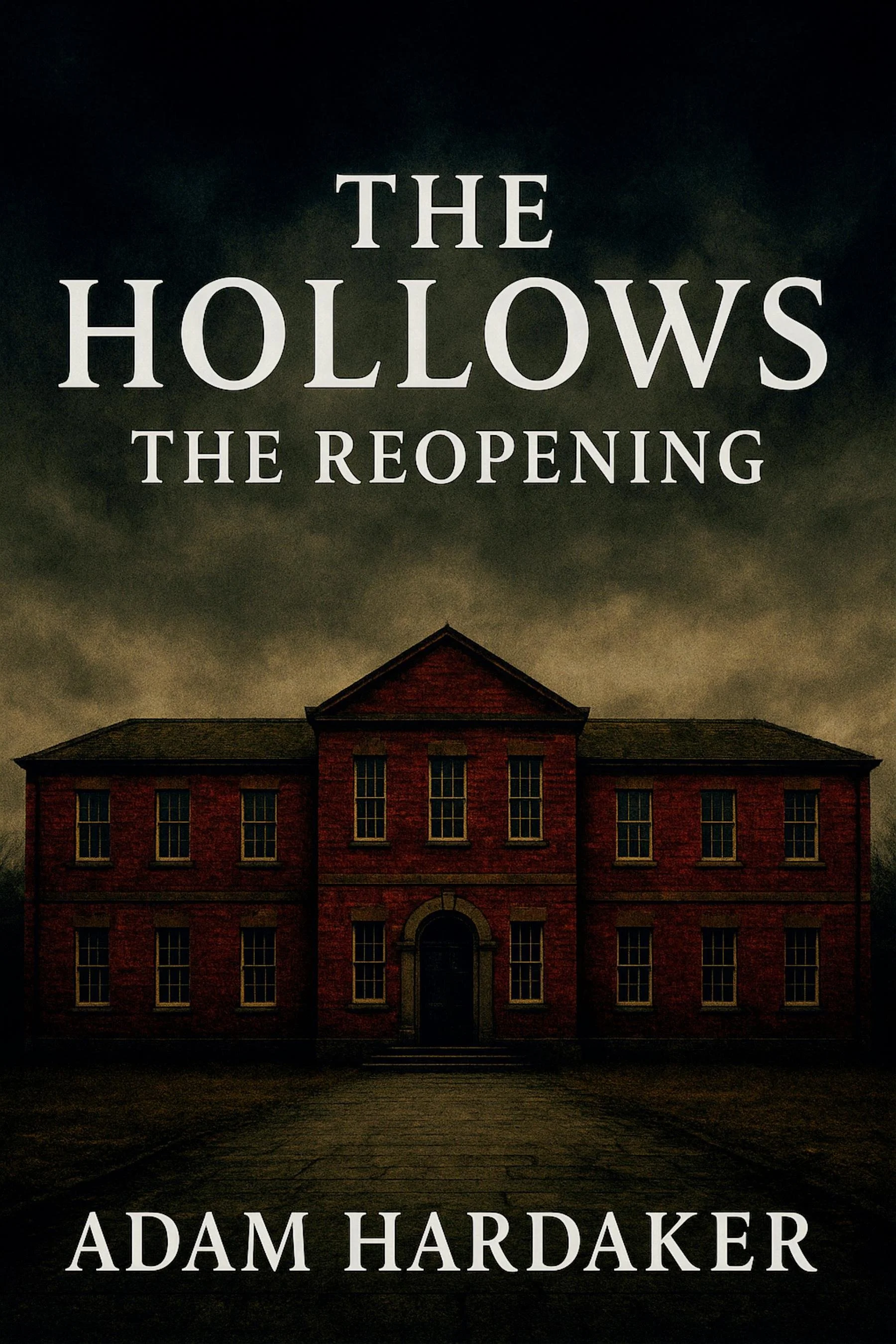
V — THE REOPENING
Silence was never the end.